 Elaine Gordon
I’m sharing one of my go-to lunch recipes that feels indulgent but genuinely nourishes your body. This creamy avocado chicken salad comes together in minutes and works beautifully on greens, tucked into whole grain bread, or served alongside roasted broccoli for a complete meal. It’s the kind of dish I reach for when I want something satisfying that doesn’t derail my nutrition goals.
How a Simple Salad Changed My Lunch Game
Growing up in my family, we didn’t do plain chicken and vegetables. My mom understood something fundamental: food has to taste good, or you won’t keep eating it. When I became a dietitian, that philosophy only deepened. I started experimenting with ways to make lean proteins exciting, and this avocado chicken salad became my secret weapon during busy weeks.
I remember making this for my sister’s book club lunch years ago, and she asked if it was “really healthy.” That moment stuck with me. The answer was yes—not because it’s low-calorie or restrictive, but because every ingredient serves your body. The avocado provides heart-healthy monounsaturated fats that help absorb fat-soluble vitamins. The fresh cilantro and lime awaken your palate without added sodium. The chicken delivers lean protein for sustained energy.
That’s when I realized this simple salad deserved a spotlight. It proves you don’t sacrifice flavor for nutrition.
What is Avocado Chicken Salad Recipe?
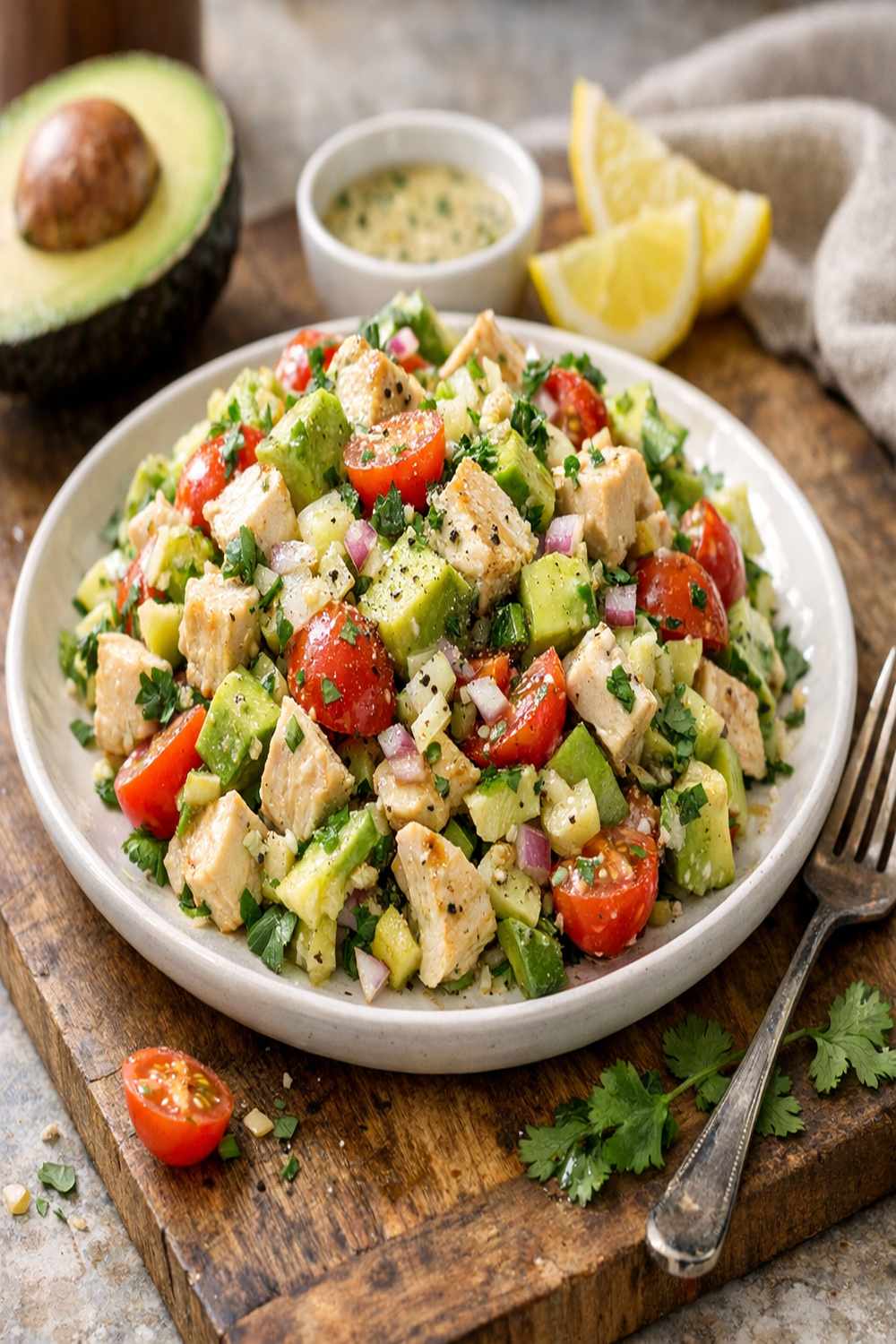
Avocado chicken salad is a creamy, protein-packed dish that blends tender shredded chicken with ripe avocados, bright lime juice, and a handful of aromatics. Unlike heavy mayo-based salads, this version uses just enough mayonnaise to bind ingredients while letting the natural richness of avocado shine through.
The beauty of this salad lies in its versatility. It has roots in modern American cuisine but draws inspiration from Mexican and Caribbean flavor profiles—that cilantro-lime combination isn’t accidental. It’s a flavor pairing that cultures throughout Latin America have perfected for generations.
What makes mine special is the balance. You get creaminess without heaviness, protein without blandness, and a recipe that works for meal prep without sacrificing texture.
Why You’ll Love This Avocado Chicken Salad Recipe
- 10-Minute Preparation – This isn’t a recipe that demands hours in the kitchen. If your chicken is already cooked, you’re mixing and serving within minutes. Perfect for weeknight dinners or lunch prep.
- Nutrient-Dense Ingredients – From a dietitian’s perspective, every component supports your health. You’re getting complete protein, healthy fats, fiber, and micronutrients like potassium and vitamin K from the avocado alone.
- Endlessly Adaptable – Serve it on mixed greens, in whole wheat wraps, atop avocado chicken with fresh vegetables, or as a dip with vegetables. The same salad works for lunch, dinner, or even a light appetizer.
- Satisfying Without Being Heavy – The combination of fat and protein keeps you full for hours without that sluggish post-meal feeling many creamy salads cause.
- Naturally Flavorful – Fresh cilantro, lime juice, and garlic powder mean you’re not relying on excessive salt or artificial seasonings. Your taste buds recognize real food.
The Ingredients
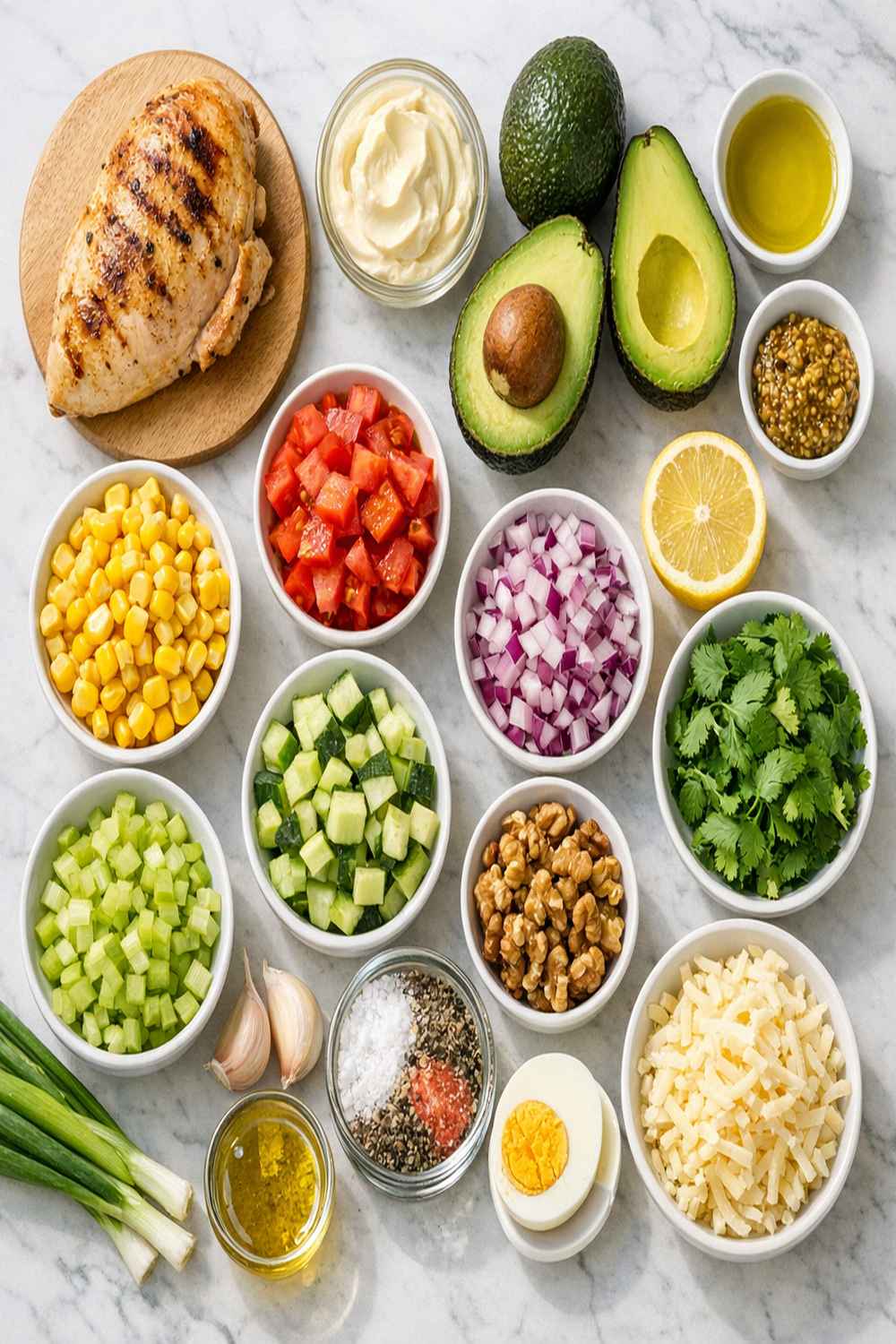
Let me walk you through each ingredient and why it matters. I’ve learned that understanding your ingredients leads to better cooking—you make intentional swaps and understand how flavors work together.
- 2 ripe avocados (use avocados at their peak—soft but not mushy or brown inside)
- 2½ teaspoons fresh lime juice (bottled works, but fresh is noticeably better)
- ¼ cup fresh cilantro leaves (finely chopped, not packed)
- ¼ cup diced red onion (add more if you love sharp bite, less if you prefer mild)
- 3 tablespoons mayonnaise (use quality mayo for better flavor; less is more here)
- ½ teaspoon garlic powder (freshly ground if possible—it makes a difference)
- 3 cups cooked chicken breast (shredded or diced into bite-sized pieces)
- Pinch of red pepper flakes (optional, for subtle heat)
- ¼ teaspoon black pepper (freshly cracked)
- ¾ teaspoon sea salt (adjust to taste at the end)
This recipe makes approximately 4 generous servings as a main course, or 6 servings as a side salad.
How to Make Avocado Chicken Salad Recipe?
The technique here is straightforward, but paying attention to timing and texture makes all the difference. I’ve learned through years of recipe testing that the order you add ingredients matters more than people realize.
Step 1: Prep Your Chicken
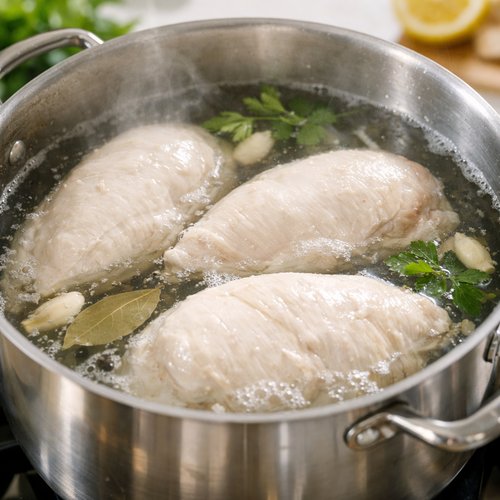
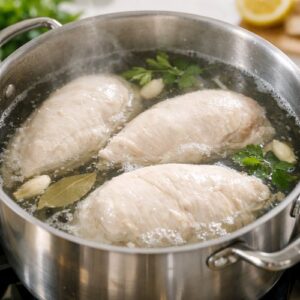
If you haven’t already cooked your chicken, now’s the time. I poach mine in salted water for the most tender, juicy results—about 12-15 minutes for bone-in breasts, 8-10 minutes for boneless. Let it cool completely before shredding. Cold chicken is easier to work with and won’t melt your avocado prematurely.
You want your chicken in bite-sized pieces or thin shreds—nothing too chunky. This ensures every forkful has balanced texture.
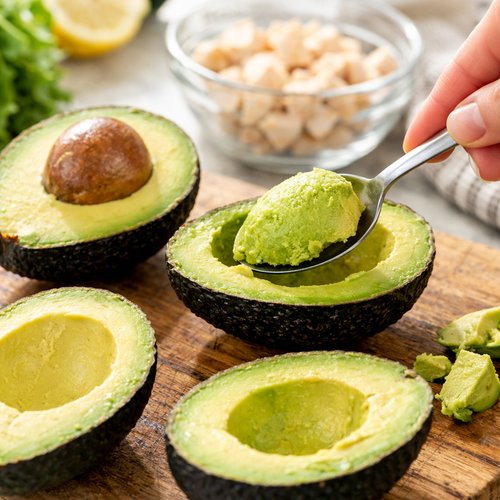
Step 2: Halve and Scoop Your Avocados
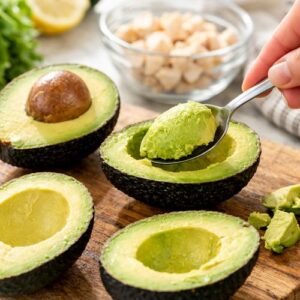
This step requires attention to avocado ripeness. A perfect avocado yields slightly to gentle pressure but isn’t mushy. If you cut into brown or darkened flesh, the avocado is over-ripe—start fresh. Halve your avocados lengthwise, rotating around the pit. Gently twist to separate the halves, then scoop the flesh into a mixing bowl using a sturdy spoon.
Don’t mash the avocado completely yet. You want some texture remaining—we’re not making guacamole. Leave it in rough, chunky pieces.
Step 3: Combine the Wet Ingredients First
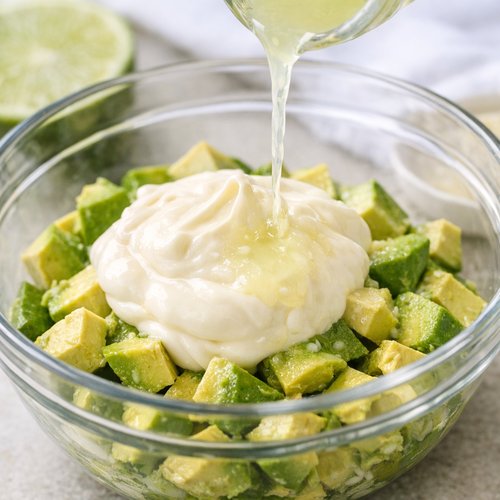
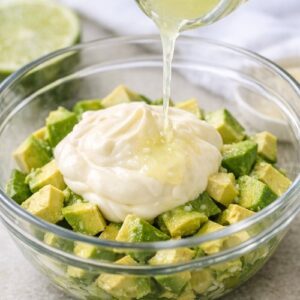
Add your mayonnaise and fresh lime juice directly to the bowl with the avocado. This is the crucial step where many home cooks fail. The acid from the lime juice (citric acid) prevents the avocado from browning, so you want this mixed in immediately. Gently fold everything together using a rubber spatula, working just until the avocado is broken down enough to coat everything but still retains some texture.
Don’t overmix—you’re not making a paste. Stop when you see a creamy, flecked consistency.
Step 4: Add the Aromatics and Chicken
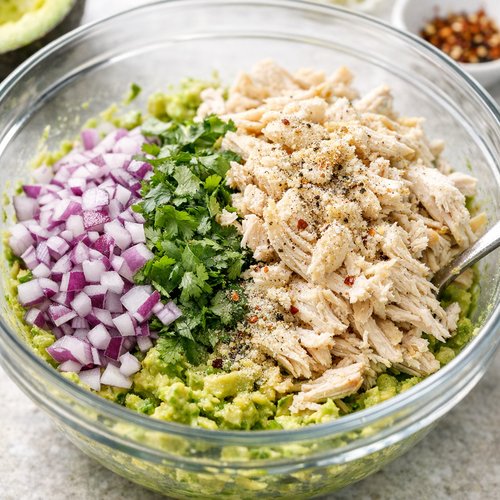
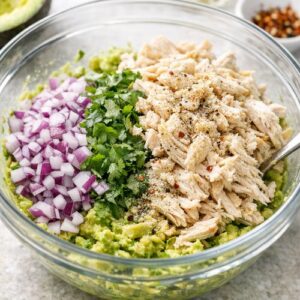
Now fold in your diced red onion, fresh cilantro, and cooled shredded chicken. Season with garlic powder, sea salt, black pepper, and a pinch of red pepper flakes if you’re using them. Fold gently until everything is evenly distributed—this should take less than a minute of stirring.
Taste before you finish. This is where you adjust salt and lime to match your preference. Some people love a citrus-forward salad; others prefer it subtler. Trust your palate.
Step 5: Serve Immediately or Prepare for Storage
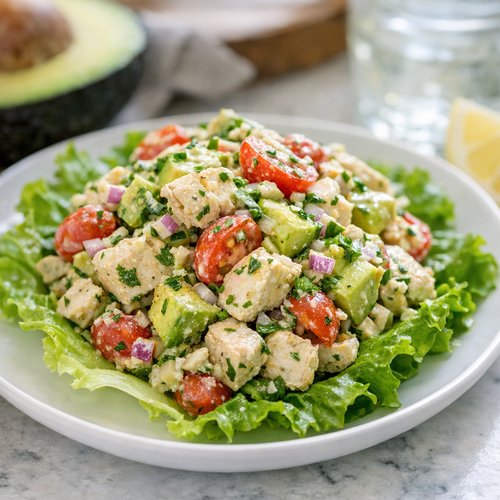
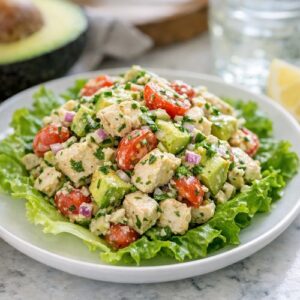
This salad is best enjoyed right away, when flavors are brightest and textures are ideal. If you’re eating it within a few hours, serve it as-is on a bed of mixed greens, in a whole wheat wrap, or simply with crackers on the side.
If you’re meal-prepping (more on this below), transfer to an airtight container and proceed directly to the refrigerator. Eat within 1-2 days for best quality.
Expert’s Nutritional Tip: The Power of Avocado Fat
As a dietitian, I want to highlight something crucial about this recipe. The fat in avocados—roughly 77% of calories from fat—isn’t something to fear. These are primarily monounsaturated fats, the same heart-healthy fats found in olive oil and nuts. Research from the USDA and published in journals like Nutrients shows that monounsaturated fats improve cholesterol profiles and support cardiovascular health.
More importantly, the fat in this salad serves a functional purpose: it helps your body absorb fat-soluble vitamins like A, D, E, and K from the other vegetables you’ll eat alongside it. If you serve this on greens, the avocado fat helps your body absorb the chlorophyll, carotenoids, and vitamins in those leaves. That’s not indulgence—that’s smart nutrition strategy.
Tips and Tricks
- Choose Your Avocado Timing – Buy avocados 2-3 days before you plan to use them. They’ll be perfectly ripe when you need them. A ripe avocado feels like a firm pear—it yields to gentle pressure but doesn’t indent.
- Use a Citrus Press for Lime Juice – Fresh lime juice makes a noticeable difference in flavor. If you have a small citrus press, use it. The juice is brighter than bottled, and you’ll use less.
- Cold Chicken is Essential – Warm chicken will partially cook the avocado and make it break down unevenly. Always let your chicken cool completely before mixing.
- Quality Mayonnaise Matters – I use full-fat, eggless mayo made with quality oils. The flavor is noticeably better than generic brands, and since we’re using less mayo than traditional recipes, quality really shows.
- Don’t Skip the Red Onion – That sharp bite provides contrast that makes every other flavor pop. If raw onion bothers your stomach, soak the diced pieces in ice water for 10 minutes before adding them—this mellows the harshness while keeping the flavor.
- Garlic Powder Over Fresh Garlic – I specifically use garlic powder here rather than minced garlic. Fresh garlic can become harsh as the salad sits, while garlic powder distributes evenly and stays mild. If you prefer fresh garlic, use ½ teaspoon minced and consume within a few hours.
Make-Ahead Guide: Strategic Meal Prep
I’ve developed a system for this salad based on years of meal-prepping for my family and clients. The key is understanding that avocado is your timeline constraint—it browns. Here’s how I work around that.
Option 1: Component Prep (My Preferred Method) – Prepare everything except assemble. Store cooked chicken in one container, diced avocado in another with lime juice squeezed over it and plastic wrap pressed directly onto the surface, and your onion-cilantro-spice mixture in a third container. Keep everything separate until you’re ready to eat. This extends shelf life to 3 days and maintains perfect texture.
Option 2: Full Salad (Best for Quick Eating) – Assemble completely and store in an airtight container with plastic wrap pressed directly onto the surface of the salad. Consume within 24 hours for optimal color and texture. This works when you’re eating it the next day for lunch.
Option 3: No-Avocado Base (Advanced Move) – Combine chicken, mayo, lime juice, onion, cilantro, and seasonings, then refrigerate. Add fresh avocado only when you’re ready to eat. The salad base keeps for 3 days and tastes fresher when you add avocado at the last moment.
Common Mistakes to Avoid
After working with home cooks for years, I’ve noticed patterns in what goes wrong with this salad. Let me save you the trouble.
Mistake 1: Overmixing – The most common error. People treat this like mashed potatoes, stirring until everything becomes a paste. You want visible chunks of avocado and shredded chicken. Mix just until combined—about 30 seconds of gentle folding. Overmixing creates an unappealing texture and accelerates browning.
Mistake 2: Using Warm Chicken – Warm chicken will melt the avocado from the inside out, creating mushy, uneven texture. Always cool your chicken completely. If you’re in a rush, spread cooked chicken on a plate and refrigerate for 10 minutes while you prep avocados.
Mistake 3: Skipping the Lime Juice Timing – The acid from lime juice prevents browning, but it only works when mixed immediately with the avocado. If you add lime juice at the very end, you’re too late. Add it with the mayo in Step 3.
Mistake 4: Too Much Mayo – This isn’t a traditional mayo-heavy chicken salad. Three tablespoons is enough to bind everything while letting avocado shine. More mayo adds unnecessary calories and mutes other flavors. Trust the recipe.
Can I Store Avocado Chicken Salad Recipe?
Storage requires strategy because avocado darkens when exposed to air. Here’s what I recommend based on how you want to use it.
If stored as a complete assembled salad, keep it in an airtight container with plastic wrap pressed directly onto the surface of the mixture. This minimizes air exposure. It will keep for 1-2 days in the refrigerator before browning becomes noticeable. The flavor is still good, but the appearance darkens.
If stored in components (my preferred method for meal prep), keep everything separate in airtight containers. The chicken base keeps for 3-4 days. Avocado mixed with lime juice keeps for 2-3 days. Combine only when ready to eat.
Freezing is not recommended. The texture of avocado becomes mushy when thawed, and the mayo-based mixture separates. This is best enjoyed fresh or kept refrigerated short-term.
Nutrition Information
Using USDA FoodData Central as my reference, here’s the approximate nutritional breakdown per serving (based on 4 servings):
Calories: 385 | Protein: 38g | Fat: 18g (12g monounsaturated) | Carbohydrates: 7g | Fiber: 4g | Sodium: 425mg
This is a nutrient-dense meal. The protein-to-calorie ratio is excellent—you’re getting substantial protein without excessive calories. The fiber supports digestive health and blood sugar stability. The sodium is reasonable, especially if you’re using unsalted chicken broth to cook your chicken.
From a micronutrient perspective, you’re getting potassium (important for blood pressure regulation), folate (especially if using cilantro), vitamin K (from cilantro and avocado), and vitamin E (an antioxidant from the avocado fat). This isn’t empty nutrition—this is food that supports multiple body systems.
What Can I Serve With Avocado Chicken Salad Recipe?
The beauty of this salad is its flexibility. Here are my favorite ways to serve it, depending on the occasion and what I’m craving.
- On Mixed Greens – Layer the salad over a bed of arugula, spinach, or butter lettuce. The peppery greens complement the creamy salad perfectly. This is my standard lunch presentation.
- In Whole Grain Wraps – Spoon into large lettuce leaves or whole wheat tortillas for a portable lunch. Add sliced tomato and cucumber for extra crunch.
- With Whole Grain Crackers – Serve as a dip alongside whole grain crackers or vegetable sticks. It’s elegant enough for entertaining and easy to eat standing up.
- Alongside Roasted Vegetables – Pair with spicy roasted asparagus or roasted broccoli for a complete dinner plate.
- Stuffed in Tomato Halves – Hollow out large tomato halves and fill with salad. It’s visually appealing and creates natural portion control.
- Over Cauliflower Rice – For lower-carb serving, pile it onto cauliflower rice. The creamy salad coats the rice beautifully.
Seasonal Variations
This recipe adapts beautifully throughout the year. Here’s how I modify it seasonally while keeping the core technique identical.
Spring: Add fresh spring peas (¼ cup), minced fresh dill (1 teaspoon), and lemon juice instead of lime. Spring vegetables are tender and bright—let them shine. The dill connects to traditional spring herb pairings.
Summer: This is the classic version. Lime and cilantro are at their peak. Consider adding diced mango (¼ cup) for a tropical variation that feels seasonal and special.
Fall: Swap cilantro for parsley, use pomegranate juice (1 teaspoon) alongside lime juice, and add toasted pumpkin seeds (2 tablespoons) for crunch and seasonal flavor. The earthiness complements cooler weather meals.
Winter: Add roasted red bell pepper (¼ cup diced), use lemon juice instead of lime, and include fresh tarragon (½ teaspoon) for a more sophisticated flavor profile. Winter often calls for warmer, more complex herbs.
Substitutes
- Chicken Alternatives – Use turkey breast, grilled salmon, or canned white beans for vegetarian protein. Adjust cooking time accordingly. Turkey works seamlessly; salmon adds richness; beans provide different nutrition (more fiber, less fat).
- Mayo Substitute – Use Greek yogurt (same amount) for fewer calories and added protein. The tang is slightly different but equally delicious. Some prefer this version.
- Cilantro Alternative – If cilantro tastes soapy to you (a real genetic variation), use fresh basil or parsley instead. Basil adds Italian notes; parsley is mild and versatile.
- Lime Juice Alternative – Fresh lemon juice works well, though it’s slightly less bright. White wine vinegar (1 teaspoon) provides acidity if neither citrus is available.
- Red Onion Alternative – Use shallots (½ shallot, minced) for milder flavor, or white onion for sharper bite. Green onions provide different texture but less depth.
- Avocado Alternative – In a pinch, use creamy cucumber (peeled and seeded, about ½ large) for similar texture with different nutrition. The salad will be lighter but less rich.
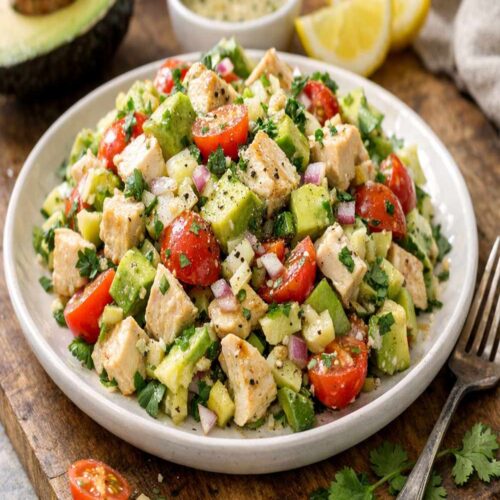
Avocado Chicken Salad Recipe

Ingredients
- 2 ripe avocados (use avocados at their peak
- 2½ teaspoon fresh lime juice bottled works, but fresh is noticeably better
- ¼ cup fresh cilantro leaves finely chopped, not packed
- ¼ cup diced red onion add more if you love sharp bite, less if you prefer mild
- 3 tablespoon mayonnaise use quality mayo for better flavor; less is more here
- ½ teaspoon garlic powder (freshly ground if possible
- 3 cup cooked chicken breast shredded or diced into bite-sized pieces
- Pinch of red pepper flakes optional, for subtle heat
- ¼ teaspoon black pepper freshly cracked
- ¾ teaspoon sea salt adjust to taste at the end
Instructions
Step 1: Prep Your Chicken
- If you haven't already cooked your chicken, now's the time. I poach mine in salted water for the most tender, juicy results—about 12-15 minutes for bone-in breasts, 8-10 minutes for boneless. Let it cool completely before shredding. Cold chicken is easier to work with and won't melt your avocado prematurely. You want your chicken in bite-sized pieces or thin shreds—nothing too chunky. This ensures every forkful has balanced texture.
Step 2: Halve and Scoop Your Avocados
- This step requires attention to avocado ripeness. A perfect avocado yields slightly to gentle pressure but isn't mushy. If you cut into brown or darkened flesh, the avocado is over-ripe—start fresh. Halve your avocados lengthwise, rotating around the pit. Gently twist to separate the halves, then scoop the flesh into a mixing bowl using a sturdy spoon. Don't mash the avocado completely yet. You want some texture remaining—we're not making guacamole. Leave it in rough, chunky pieces.
Step 3: Combine the Wet Ingredients First
- Add your mayonnaise and fresh lime juice directly to the bowl with the avocado. This is the crucial step where many home cooks fail. The acid from the lime juice (citric acid) prevents the avocado from browning, so you want this mixed in immediately. Gently fold everything together using a rubber spatula, working just until the avocado is broken down enough to coat everything but still retains some texture. Don't overmix—you're not making a paste. Stop when you see a creamy, flecked consistency.
Step 4: Add the Aromatics and Chicken
- Now fold in your diced red onion, fresh cilantro, and cooled shredded chicken. Season with garlic powder, sea salt, black pepper, and a pinch of red pepper flakes if you're using them. Fold gently until everything is evenly distributed—this should take less than a minute of stirring. Taste before you finish. This is where you adjust salt and lime to match your preference. Some people love a citrus-forward salad; others prefer it subtler. Trust your palate.
Step 5: Serve Immediately or Prepare for Storage
- This salad is best enjoyed right away, when flavors are brightest and textures are ideal. If you're eating it within a few hours, serve it as-is on a bed of mixed greens, in a whole wheat wrap, or simply with crackers on the side. If you're meal-prepping (more on this below), transfer to an airtight container and proceed directly to the refrigerator. Eat within 1-2 days for best quality.
Notes
Nutrition
FAQs
Can I make this salad ahead for the whole week?
Partially, yes. I recommend the component method: prepare the chicken base with mayo, lime, and seasonings, and store separate from fresh avocado. Assemble daily or every other day. The avocado is your constraint—it browns, typically becoming noticeably darker within 24-48 hours. The good news is assembling takes 2 minutes, so daily assembly is realistic for meal prep.
What if my avocados are too hard or too soft?
Hard avocados: Let them sit at room temperature for 1-2 days until they yield slightly to pressure. Don’t try to force a hard avocado—the texture won’t be creamy. Soft or mushy avocados: They’re past their prime. The flesh will be brown inside, and the flavor will be off. Start fresh with a new avocado. Learning to select perfect avocados takes practice, but it makes an enormous difference in this recipe.
Is this salad safe for pregnant women?
Absolutely. All ingredients are pregnancy-safe. Avocados provide folate, which is crucial for fetal development. Chicken is lean protein. The lime juice is fine. The only consideration: ensure your mayo is made with pasteurized eggs, which is standard in commercial mayo. If you have any dietary restrictions or concerns specific to your pregnancy, discuss with your healthcare provider.
How can I reduce sodium in this recipe?
Use unsalted mayo and reduce added salt to ½ teaspoon initially, then taste and adjust. Cook your chicken in unsalted broth rather than salted water. At those adjustments, sodium drops to around 300mg per serving while maintaining flavor. Taste before serving—you might find you need less salt than the recipe suggests anyway.
Why does my avocado turn brown even with lime juice?
Browning is a natural oxidation process. Lime juice slows but doesn’t completely prevent it. To minimize browning: ensure lime juice mixes immediately with avocado, press plastic wrap directly onto the salad surface when storing, and consume within 24 hours. Some browning is purely aesthetic—the salad still tastes good even if the color darkens slightly.
More Recipes You’ll Love
- Authentic Mexican Chicken Taco Recipe – Another way to use that creamy chicken base with Mexican-inspired flavors and fresh toppings.
- Asian Tacos Recipe – A completely different direction using similar preparation techniques and fresh protein.
Final Thoughts
This avocado chicken salad represents everything I believe about healthy eating: it should taste incredible, come together quickly, and nourish your body with real ingredients. The version I’m sharing with you today is the result of hundreds of meals made for my family, refined through feedback and testing, and informed by my background as a registered dietitian.
I hope you make this soon and discover why it’s been my reliable lunch for over a decade. Pay attention to the texture of your avocado, don’t skip the immediate lime juice step, and trust that simplicity is often superior to complexity.
Your future self will thank you for the meal-prep effort, and your taste buds will celebrate the combination of flavors. Enjoy your cooking!!