 Elaine Gordon
There’s something about a bold, smoky pasta that feels both indulgent and nourishing at the same time. This blackened pasta brings together tender chicken, a luscious cream sauce infused with Cajun spices, and perfectly cooked rigatoni—all ready in under 45 minutes. Pair it with roasted vegetables like roasted frozen broccoli or a spicy asparagus recipe to balance the richness, and you’ve got a complete meal your whole family will ask for again.
How I Fell in Love with Blackened Spices
I remember the first time my mom brought home a cast-iron skillet from a cooking class she’d taken in New Orleans. She was nervous—honestly, a little intimidated by it. But then she made blackened chicken for our family dinner, and I watched that pan smoke and sizzle like it was pure magic. The flavors were deep, smoky, and complex in a way I’d never experienced before.
What struck me as a young dietitian wasn’t just how incredible it tasted, but how the spice blend—paprika, cayenne, garlic powder, and black pepper—added so much flavor without relying on salt or fat. That’s the secret right there. Blackening is actually a technique that teaches us how to build depth through spices and heat, making every bite satisfying.
Now, I’ve adapted that childhood memory into an everyday pasta that doesn’t feel like a diet meal. It’s comfort food that happens to be thoughtful about nutrition, and that’s exactly my philosophy in the kitchen.
What is Blackened Pasta?
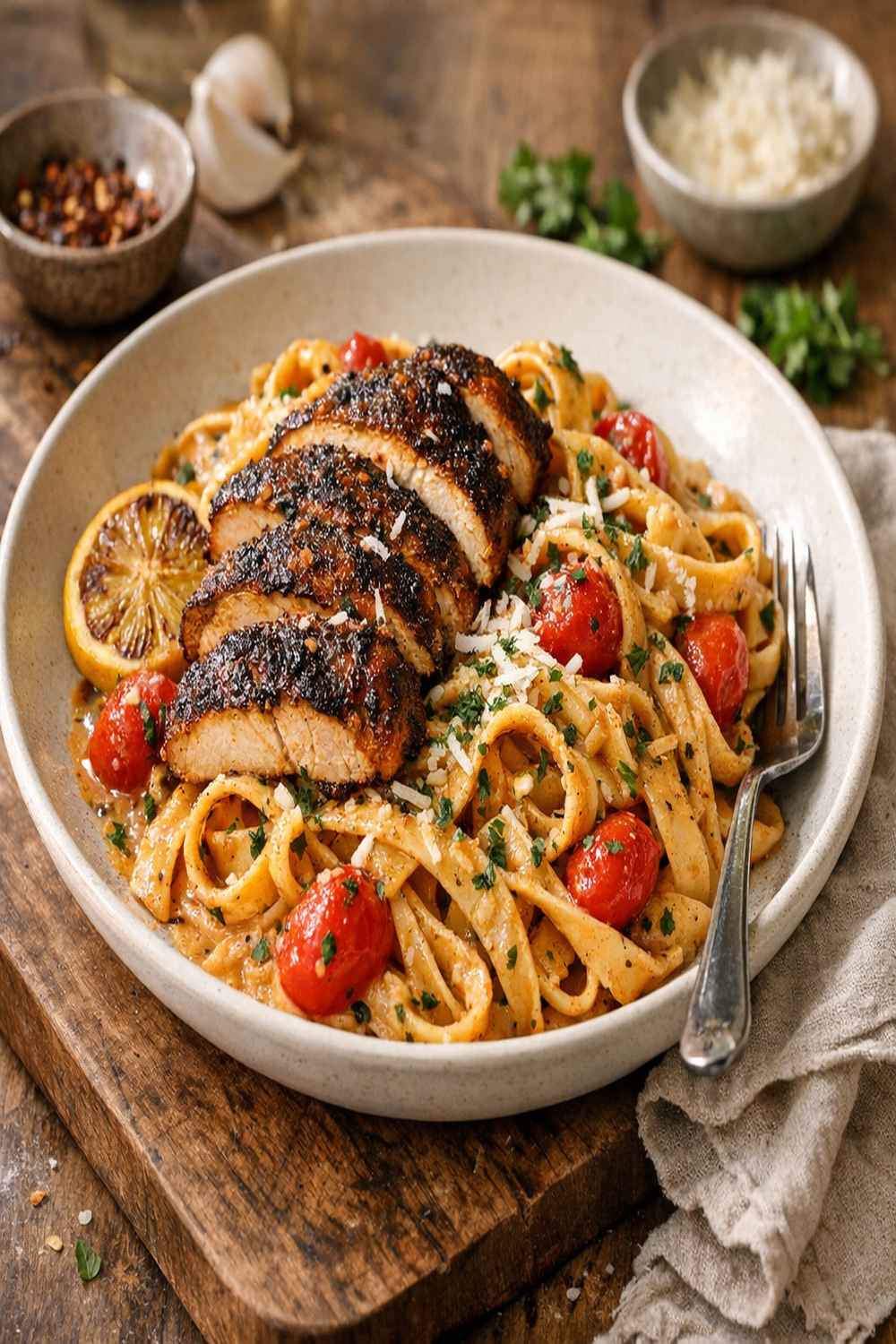
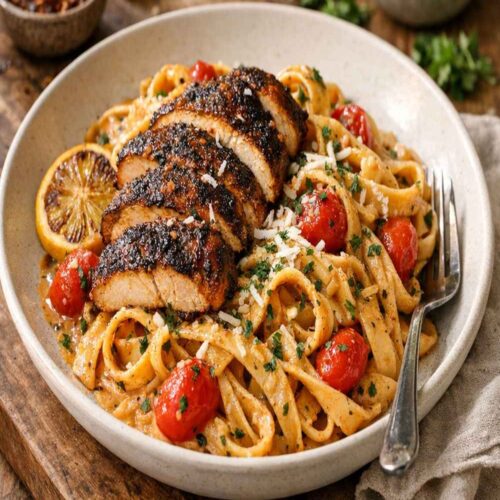
Blackened pasta combines the bold Cajun technique with creamy Italian-style pasta. The dish features chicken that’s crusted with warm spices—paprika, cayenne, garlic, and black pepper—then seared until the coating becomes deeply caramelized and smoky.
That blackened chicken becomes the star of a velvety cream sauce made with chicken broth, heavy cream, and Parmesan. The spices infuse the sauce as it simmers, creating layers of flavor that taste restaurant-quality but are completely manageable at home.
This isn’t authentic New Orleans blackening—that’s its own beautiful tradition. Instead, this is a modern American interpretation that brings Cajun heat to a creamy pasta dinner. It’s comforting, elegant enough for guests, and honest enough for a Tuesday night.
Why You’ll Love This Blackened Pasta Recipe
- Ready in under 45 minutes – From cutting board to table, this is genuinely weeknight-friendly without sacrificing flavor or texture
- Spice-forward, not cream-heavy – The Cajun seasoning does the heavy lifting, so you get satisfaction without feeling overstuffed afterward
- Adaptable to your pantry – Swap proteins, adjust heat levels, use what you have on hand
- Makes excellent leftovers – This actually tastes better the next day as flavors meld overnight
- Naturally high in protein – Chicken breast and Parmesan make this more balanced than cream-heavy pastas
- Teaches you a fundamental cooking technique – Blackening shows you how to build flavor through proper searing and spice layering
The Ingredients
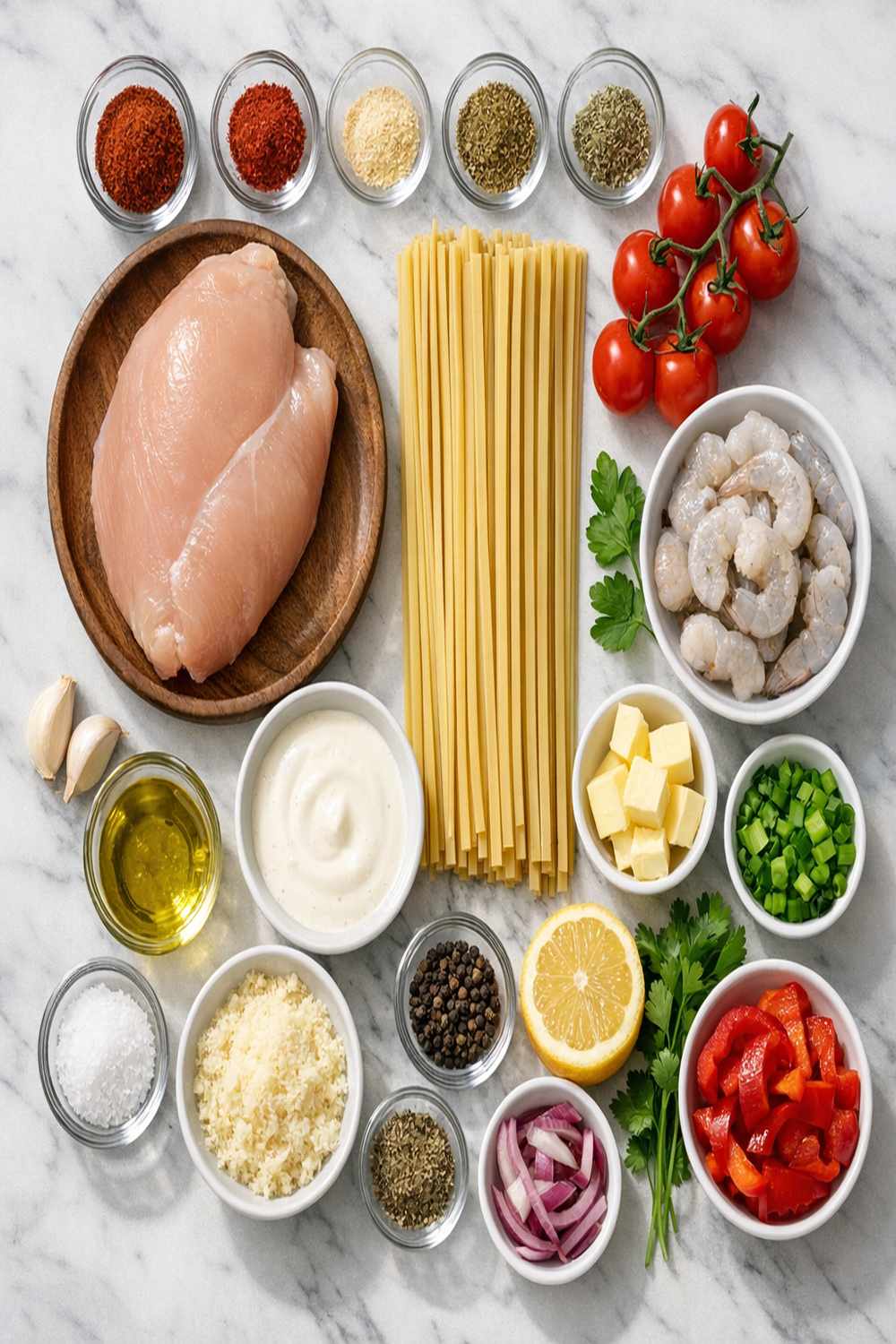
I’ve listed these ingredients by component—the protein, the spice blend, and the sauce. This makes it easier to understand how each piece works together. You’ll notice I’m using boneless, skinless chicken breast because it’s lean, cooks quickly, and becomes wonderfully tender when seared properly. The cream sauce is where richness lives, and that’s intentional—balance matters.
For the Blackened Chicken
- 1½ pounds boneless skinless chicken breast (about 3 medium breasts, pounded to ¾-inch thickness)
- 2 tablespoons extra virgin olive oil (for searing)
- 2 tablespoons blackened seasoning (store-bought or homemade)
For the Creamy Cajun Sauce
- ½ teaspoon kosher salt (adjust to taste)
- 1 teaspoon cracked black pepper (freshly ground if possible)
- 2 cups heavy cream (full-fat, cold from the refrigerator)
- 1 tablespoon tomato paste (adds depth and slight acidity)
- ¼ cup unsalted butter (room temperature, divided use)
- 1 cup grated Parmesan cheese (freshly grated works best)
- 1 teaspoon paprika (for color and mild sweetness)
- 1 teaspoon blackened seasoning (reinforces the Cajun profile)
- 1 tablespoon fresh garlic (minced, not from a jar)
- 1½ cups chicken broth (low-sodium preferred)
- ½ medium yellow onion (diced into small pieces)
For Assembly
- Crushed red pepper flakes (optional, for extra heat)
- ½ cup fresh flat-leaf parsley (chopped, for garnish)
- 2 tablespoons reserved pasta water (for sauce consistency)
- 16 ounces rigatoni pasta (or penne, depending on preference)
Serves 4 people generously with about 1.5 cups per serving.
How to Make Blackened Pasta?
I’m going to walk you through this step-by-step, and I promise it’s more forgiving than it looks. The key is having everything prepped before you start cooking—mise en place is your friend here. Once the pan heats up, things move quickly, so having your ingredients ready means you stay in control.
Step 1: Prepare Your Chicken for Searing
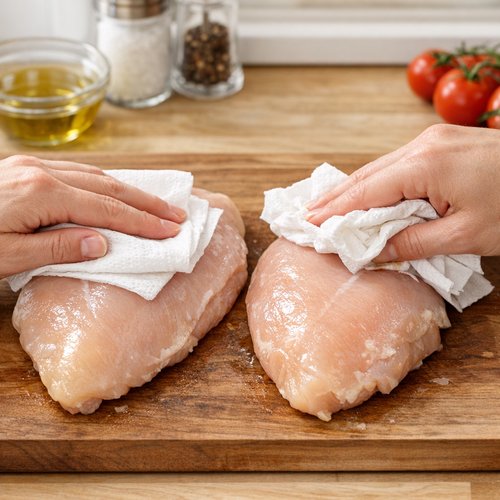
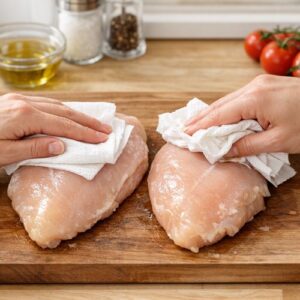
Remove your chicken breasts from the refrigerator about 15 minutes before cooking. Pat them completely dry with paper towels—this is absolutely critical for getting a proper sear. Moisture is the enemy of browning.
Place each breast between two sheets of plastic wrap and pound it gently to an even ¾-inch thickness. This ensures everything cooks at the same rate and the chicken stays tender. Pour your blackened seasoning onto a shallow plate and season both sides of each breast generously, pressing gently so the spices adhere.
Step 2: Sear the Chicken Until Deeply Golden
Heat 2 tablespoons of extra virgin olive oil in a large skillet over medium-high heat. You want the oil to shimmer and move easily—this typically takes 2-3 minutes. Test it by holding your hand a few inches above the pan; you should feel significant heat.
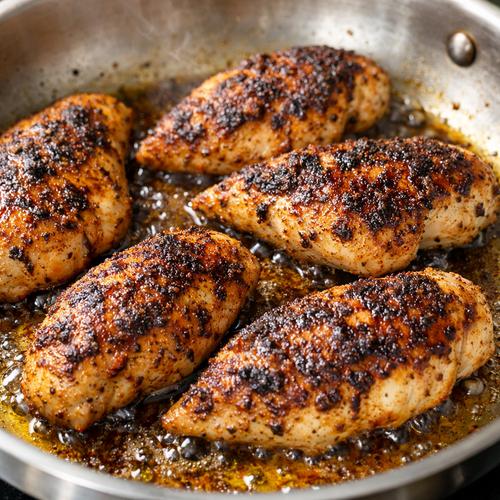
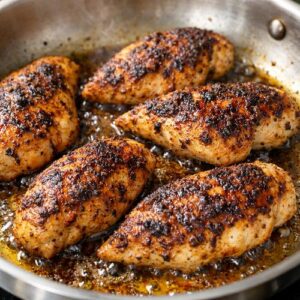
Carefully place your seasoned chicken in the hot oil. Don’t move it for 6-7 minutes. This is where the magic happens. The spices caramelize, the exterior blackens slightly (yes, it should look dark—that’s the point), and a flavorful crust forms. You’ll know it’s ready to flip when it releases easily from the pan.
Flip each breast and cook the second side for 5-6 minutes until the internal temperature reaches 165°F when measured with an instant-read thermometer at the thickest part. The exterior should be deeply browned, almost charred in spots. That’s not burned; that’s blackened.
Transfer the cooked chicken to a cutting board and tent it loosely with foil. It will continue cooking slightly as it rests. Don’t skip this step—resting keeps the juices inside instead of on your plate.
Step 3: Cook Your Pasta According to Package Directions
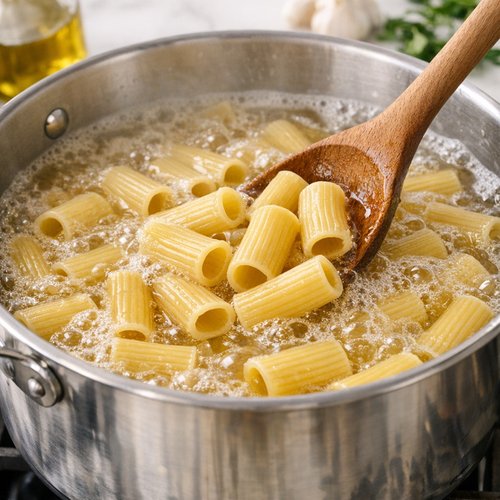
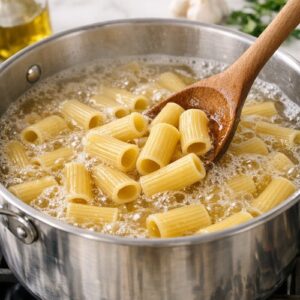
While your chicken rests, bring a large pot of salted water to a rolling boil. Add 16 ounces of rigatoni and stir occasionally to prevent sticking. Cook for 2 minutes less than the package recommends—you want the pasta slightly al dente because it will finish cooking in the sauce.
Reserve ½ cup of pasta water before draining. This starchy water is liquid gold for adjusting your sauce consistency. Drain the pasta but don’t rinse it; the starch helps the sauce cling beautifully.
Step 4: Build Your Creamy Cajun Sauce
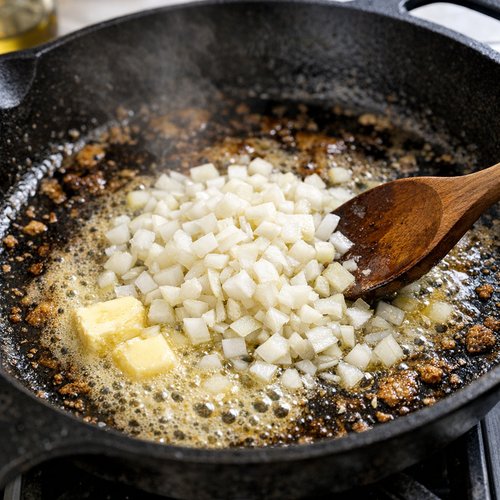
In the same skillet where you seared the chicken (yes, keep those browned bits), melt 2 tablespoons of butter over medium heat. Add your diced onion and cook for 3-4 minutes, stirring occasionally, until it becomes soft and slightly translucent.
Add your minced garlic and cook for 30 seconds to 1 minute until fragrant. Then add the tomato paste and stir constantly for about 1 minute. This cooking step removes any raw flavor from the paste and deepens its color.
Sprinkle in the paprika, blackened seasoning, black pepper, and kosher salt. Stir everything together and cook for another minute. At this point, your kitchen should smell absolutely incredible—toasted spices, caramelized aromatics, and that signature Cajun warmth.
Step 5: Create the Cream Sauce Base
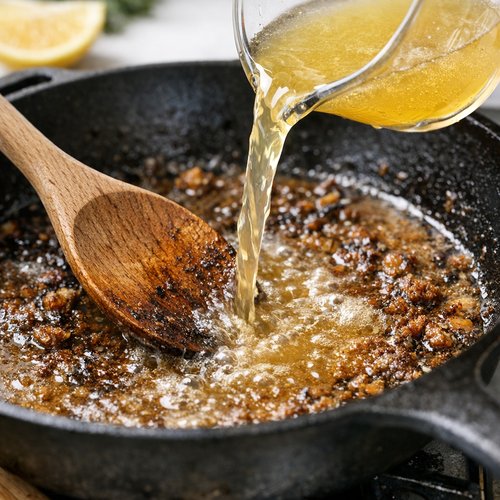
Pour in your chicken broth, using a wooden spoon to scrape up all those browned, flavorful bits from the bottom of the pan (this is called deglazing). Bring the mixture to a gentle simmer and let it bubble for 3-4 minutes so the broth reduces slightly and concentrates in flavor.
Slowly pour in your cold heavy cream while stirring constantly. Cold cream added to hot broth can separate if you’re not careful, but constant gentle stirring prevents this. The mixture should look smooth and silky. Never let it reach a hard boil—keep the heat at medium so it simmers gently.
Step 6: Finish with Cheese and Combine Everything
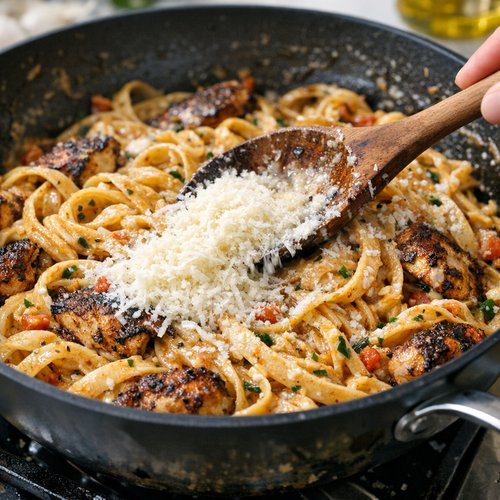
Remove the pan from heat slightly and stir in your grated Parmesan cheese a little at a time, stirring constantly until fully incorporated. The residual heat will melt it perfectly without making it grainy. If your sauce seems too thick, add reserved pasta water a tablespoon at a time until you reach the consistency you like—it should coat the back of a spoon but still flow slightly.
Add your cooked pasta directly to the sauce and toss gently but thoroughly, using tongs to coat every strand. Taste and adjust seasoning with salt and pepper as needed.
Slice your rested chicken against the grain into strips (this makes it more tender) and arrange over the pasta. Garnish with fresh chopped parsley and a pinch of crushed red pepper if you want extra heat.
Expert’s Nutritional Tip
As a registered dietitian, I want to point out something important: the blackened spice blend is doing crucial work here beyond just flavor. Paprika and black pepper are rich in antioxidants and have been shown in research to support healthy digestion. The garlic and onion in the sauce provide prebiotics—compounds that feed your beneficial gut bacteria.
The heavy cream might seem like a nutritional concern, but when you look at the whole dish, the protein from chicken and Parmesan keeps you satisfied longer, which means you’re less likely to snack afterward. That’s real nutrition science: satisfaction matters for sustainable eating. A little cream in a balanced meal often serves you better than a fat-free version that leaves you hungry.
Tips and Tricks
- Make your own blackened seasoning – Mix 1 tablespoon paprika, 1 tablespoon garlic powder, 1 tablespoon onion powder, 1 teaspoon cayenne, 1 teaspoon dried oregano, 1 teaspoon dried thyme, and 2 teaspoons black pepper. Store in an airtight container for up to 3 months. This gives you control over heat level and freshness
- Don’t skip the resting step – Those 5 minutes after cooking chicken allow carryover cooking to finish the job safely while keeping meat juicy. It’s the difference between tender chicken and tough, dried-out chicken
- Use fresh-grated Parmesan – Pre-grated cheese has anti-caking agents that prevent it from melting smoothly into the sauce. Fresh-grated melts silky and creates better texture
- Reserve pasta water before draining – Seriously, this starchy water is your secret weapon for adjusting sauce consistency without thinning out flavors. Add it slowly until you get the consistency you like
- Taste as you go – Every stove, every cream brand, every spice has subtle variations. Season in layers and taste frequently so you catch what your specific dish needs
- Pound chicken to even thickness – This prevents dry edges and raw centers. An even ¾-inch thickness means everything finishes cooking simultaneously
Common Mistakes to Avoid
- Cooking chicken from a cold state – Cold chicken straight from the fridge takes longer to develop that golden crust. Room temperature chicken (15 minutes out) sears faster and more evenly
- Moving the chicken too early – I know the urge is strong, but fight it. Let those spices caramelize undisturbed for a full 6-7 minutes. Constant flipping prevents browning
- Boiling the cream sauce – A hard boil breaks down the cream’s emulsion and can make your sauce separate or become grainy. Keep heat at medium for a gentle simmer
- Draining pasta and washing it – The starch on your pasta is what helps the sauce cling beautifully. Rinsing it off means a slippery sauce that doesn’t coat properly
Make-Ahead Guide
I love having components of this dinner ready so that assembly becomes quick. Here’s my professional approach to meal prep for this dish:
Up to 2 days ahead: Pound and season your chicken breasts, then store them on a parchment-lined plate covered tightly with plastic wrap in the refrigerator. Make your spice blend if using homemade. Dice your onion and mince your garlic, storing in separate containers.
Up to 4 hours ahead: Cook your pasta until al dente minus 2 minutes, drain it (reserve pasta water), and store in an airtight container at room temperature. Toss it with 1 teaspoon olive oil to prevent sticking. Don’t refrigerate cooked pasta; it becomes starchy and dense.
The sauce: I recommend making this fresh because cream sauces don’t refrigerate beautifully for days. However, you can make the spice base (through Step 4) up to 2 hours ahead, then finish with cream and cheese just before serving.
Leftover assembly: If you do have leftovers, store them separately—chicken in one container, pasta in another, sauce in a third. Reheat gently on the stovetop with a splash of broth or cream to restore the sauce’s silky texture.
Can I Store Blackened Pasta?
Yes, though I’ll be honest: this is a dish that tastes its absolute best fresh. That said, real life happens, and leftovers are better than no dinner.
Store cooked blackened pasta in an airtight container in the refrigerator for up to 3 days. The flavors actually develop slightly as they sit, so day-two pasta is sometimes even more flavorful than day-one.
To reheat, transfer to a skillet over medium-low heat and add a splash of broth or cream—about 2-3 tablespoons per serving. Stir gently until everything is warmed through and the sauce regains its silky texture, about 5-7 minutes. Alternatively, use a microwave-safe container and heat in 30-second intervals, stirring between each, until warm.
Don’t freeze blackened pasta. Cream sauces separate when frozen and thawed, and the texture becomes grainy rather than silky.
Seasonal Variations
One of my favorite things about this recipe is how easily it adapts to what’s available each season. Here are my tried-and-tested variations:
Spring: Add 1 cup fresh asparagus tips in the last 2 minutes of sauce simmering, or stir in 2 tablespoons fresh lemon juice just before serving to brighten the creamy sauce. A handful of fresh peas works beautifully too.
Summer: Use fresh corn kernels (about ¾ cup) added when you add the cream. Finish with fresh basil instead of parsley. The sweetness of corn balances the heat perfectly.
Fall: Add ½ teaspoon smoked paprika instead of regular paprika for deeper warmth. Consider swapping half the chicken broth for apple cider for subtle sweetness.
Winter: Stir in ½ cup sun-dried tomatoes (oil-packed, chopped) or add 4 ounces sliced mushrooms sautéed separately. A pinch of nutmeg in the sauce adds cozy warmth without being obvious.
Nutrition Information
Per serving (one quarter of the recipe): Calories: 865 | Protein: 48g | Carbohydrates: 58g | Fat: 45g | Fiber: 2g | Sodium: 680mg (before additional salt adjustment)
This nutrition information is based on USDA FoodData Central standards for the ingredients listed. The high protein content—nearly half the calories come from protein—keeps you satisfied longer and supports muscle maintenance. The fat comes primarily from the cream and cheese, which provide fat-soluble vitamins like vitamins A, D, and K2.
If you’re watching sodium intake, you can reduce the blackened seasoning slightly or use a low-sodium version. The natural saltiness of Parmesan will still carry the flavors beautifully.
What Can I Serve With Blackened Pasta?
This pasta is rich and complex, so you want sides that either complement the heat or provide fresh contrast. Here are my favorite pairings:
- Roasted broccoli or roasted frozen broccoli – The slight bitterness and crispy edges balance the cream sauce beautifully. Toss with garlic and a touch of olive oil
- Spicy asparagus – Fresh and bright, with its own pepper kick that echoes the blackened seasoning without competing
- Simple green salad with lemon vinaigrette – Acidic dressing cuts through the richness and provides palate-cleansing contrast. Arugula or mixed greens work wonderfully
- Garlic bread or crusty bread – Not necessary, but wonderful for soaking up any sauce left on your plate. Use whole grain or sourdough to add nutritional balance
- Steamed green beans with garlic – Light, simple, and they don’t compete with the main dish
- Roasted cherry tomatoes – Their natural sweetness and acidity provide balance to the heat and cream
Substitutes
- Shrimp instead of chicken – Use 1½ pounds large shrimp, peeled and deveined. Reduce cooking time to 2-3 minutes per side since shrimp cooks faster than chicken. It’s equally delicious and changes the whole vibe
- Turkey breast instead of chicken – Turkey is leaner and slightly gamier, which pairs beautifully with blackened spices. Use the same weight and cooking time, though it may cook 1-2 minutes faster
- Half-and-half or whole milk instead of heavy cream – This reduces fat but will also reduce the luxurious mouthfeel. If using, add 1 tablespoon butter to the sauce for richness. The sauce will be thinner, so use less pasta water for adjustment
- Greek yogurt for some of the cream – You can substitute up to ½ cup heavy cream with Greek yogurt for a tangier, protein-boosted sauce. Add yogurt off-heat and stir gently to prevent curdling
- Penne or linguine instead of rigatoni – Any pasta shape works, but shapes with ridges hold sauce better than smooth, thin shapes
- Smoked paprika for regular paprika – Adds deeper, smokier flavor. Use the same amount, though the flavor will be more pronounced
- Gruyere or aged cheddar for Parmesan – Both melt beautifully and add different flavor notes. Gruyere is nuttier, aged cheddar is sharper. Use freshly grated
Blackened Pasta Recipe

Ingredients
For the Blackened Chicken
- 1½ pound boneless skinless chicken breast about 3 medium breasts, pounded to ¾-inch thickness
- 2 tablespoon extra virgin olive oil for searing
- 2 tablespoon blackened seasoning store-bought or homemade
For the Creamy Cajun Sauce
- ½ teaspoon kosher salt adjust to taste
- 1 teaspoon cracked black pepper freshly ground if possible
- 2 cup heavy cream full-fat, cold from the refrigerator
- 1 tablespoon tomato paste adds depth and slight acidity
- ¼ cup unsalted butter room temperature, divided use
- 1 cup grated Parmesan cheese freshly grated works best
- 1 teaspoon paprika for color and mild sweetness
- 1 teaspoon blackened seasoning reinforces the Cajun profile
- 1 tablespoon fresh garlic minced, not from a jar
- 1½ cup chicken broth low-sodium preferred
- ½ medium yellow onion diced into small pieces
For Assembly
- Crushed red pepper flakes optional, for extra heat
- ½ cup fresh flat-leaf parsley chopped, for garnish
- 2 tablespoon reserved pasta water for sauce consistency
- 16 ounce rigatoni pasta or penne, depending on preference
Instructions
Step 1: Prepare Your Chicken for Searing
- Remove your chicken breasts from the refrigerator about 15 minutes before cooking. Pat them completely dry with paper towels—this is absolutely critical for getting a proper sear. Moisture is the enemy of browning. Place each breast between two sheets of plastic wrap and pound it gently to an even ¾-inch thickness. This ensures everything cooks at the same rate and the chicken stays tender. Pour your blackened seasoning onto a shallow plate and season both sides of each breast generously, pressing gently so the spices adhere.
Step 2: Sear the Chicken Until Deeply Golden
- Heat 2 tablespoons of extra virgin olive oil in a large skillet over medium-high heat. You want the oil to shimmer and move easily—this typically takes 2-3 minutes. Test it by holding your hand a few inches above the pan; you should feel significant heat. Carefully place your seasoned chicken in the hot oil. Don't move it for 6-7 minutes. This is where the magic happens. The spices caramelize, the exterior blackens slightly (yes, it should look dark—that's the point), and a flavorful crust forms. You'll know it's ready to flip when it releases easily from the pan. Flip each breast and cook the second side for 5-6 minutes until the internal temperature reaches 165°F when measured with an instant-read thermometer at the thickest part. The exterior should be deeply browned, almost charred in spots. That's not burned; that's blackened. Transfer the cooked chicken to a cutting board and tent it loosely with foil. It will continue cooking slightly as it rests. Don't skip this step—resting keeps the juices inside instead of on your plate.
Step 3: Cook Your Pasta According to Package Directions
- While your chicken rests, bring a large pot of salted water to a rolling boil. Add 16 ounces of rigatoni and stir occasionally to prevent sticking. Cook for 2 minutes less than the package recommends—you want the pasta slightly al dente because it will finish cooking in the sauce. Reserve ½ cup of pasta water before draining. This starchy water is liquid gold for adjusting your sauce consistency. Drain the pasta but don't rinse it; the starch helps the sauce cling beautifully.
Step 4: Build Your Creamy Cajun Sauce
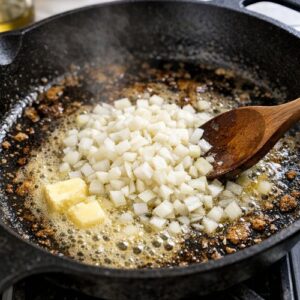
- In the same skillet where you seared the chicken (yes, keep those browned bits), melt 2 tablespoons of butter over medium heat. Add your diced onion and cook for 3-4 minutes, stirring occasionally, until it becomes soft and slightly translucent. Add your minced garlic and cook for 30 seconds to 1 minute until fragrant. Then add the tomato paste and stir constantly for about 1 minute. This cooking step removes any raw flavor from the paste and deepens its color. Sprinkle in the paprika, blackened seasoning, black pepper, and kosher salt. Stir everything together and cook for another minute. At this point, your kitchen should smell absolutely incredible—toasted spices, caramelized aromatics, and that signature Cajun warmth.
Step 5: Create the Cream Sauce Base
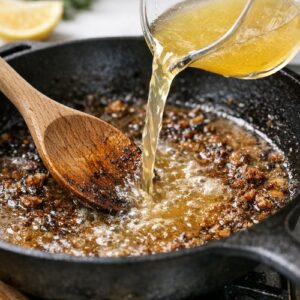
- Pour in your chicken broth, using a wooden spoon to scrape up all those browned, flavorful bits from the bottom of the pan (this is called deglazing). Bring the mixture to a gentle simmer and let it bubble for 3-4 minutes so the broth reduces slightly and concentrates in flavor. Slowly pour in your cold heavy cream while stirring constantly. Cold cream added to hot broth can separate if you're not careful, but constant gentle stirring prevents this. The mixture should look smooth and silky. Never let it reach a hard boil—keep the heat at medium so it simmers gently.
Step 6: Finish with Cheese and Combine Everything
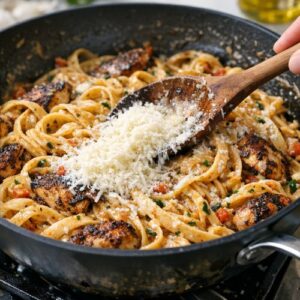
- Remove the pan from heat slightly and stir in your grated Parmesan cheese a little at a time, stirring constantly until fully incorporated. The residual heat will melt it perfectly without making it grainy. If your sauce seems too thick, add reserved pasta water a tablespoon at a time until you reach the consistency you like—it should coat the back of a spoon but still flow slightly. Add your cooked pasta directly to the sauce and toss gently but thoroughly, using tongs to coat every strand. Taste and adjust seasoning with salt and pepper as needed. Slice your rested chicken against the grain into strips (this makes it more tender) and arrange over the pasta. Garnish with fresh chopped parsley and a pinch of crushed red pepper if you want extra heat.
Notes
Nutrition
FAQs
Can I make this recipe less spicy?
Absolutely. Start with 1 tablespoon blackened seasoning instead of 2 on the chicken, and use ½ teaspoon in the sauce instead of 1 teaspoon. You’ll still get beautiful flavor from the paprika, garlic, and onion, just with reduced heat. You can always add more spice to individual servings, but you can’t remove it once it’s in the pan.
What if my sauce breaks or separates?
This typically happens when cream is boiled or when temperature fluctuates dramatically. If you notice graininess or separation, remove the pan from heat immediately. Whisk in 1-2 tablespoons of cold cream (or ice water) while stirring constantly and gently. The mixture should come back together. If that doesn’t work, strain the sauce through a fine-mesh sieve, pressing solids gently, and start with fresh cream, reheating the strained sauce gently.
Can I use store-bought blackened seasoning?
Yes, and I do regularly when I’m short on time. Check the ingredient list to make sure paprika is the first spice listed and that it doesn’t contain excessive salt. Most quality brands are excellent. If your store-bought version is quite salty, reduce the kosher salt in the recipe by ¼ teaspoon.
How do I know when the chicken is really done?
Use an instant-read thermometer inserted into the thickest part of the chicken without touching bone: 165°F is the safe internal temperature according to food safety standards. If you don’t have a thermometer, cut into the thickest part and check that there’s no pink and juices run clear. The chicken will continue cooking as it rests, so you can pull it at 160°F if you prefer it slightly more tender.
Can I prep this ahead for entertaining?
Yes, strategically. Pound and season your chicken up to 2 days ahead. Make your spice base (through sautéing aromatics and tomato paste) 4 hours ahead and refrigerate. Cook pasta 4 hours ahead and store at room temperature. Just before guests arrive, finish cooking the chicken, bring your spice base back to a simmer, add the cream and cheese, combine with pasta, and serve. Dinner is on the table in about 30 minutes with most of the work done ahead.
More Recipes You’ll Love
- Alfredo Mac and Cheese Recipe – Another creamy pasta that’s equally comforting but with a different flavor profile
- Authentic Mexican Chicken Taco Recipe – Uses similar blackening and searing techniques but in a completely different direction
- Avocado Chicken Healthy Recipe – Another balanced chicken dish that doesn’t sacrifice flavor for nutrition
There you have it—a complete blackened pasta dinner that tastes like you’ve been cooking all afternoon but actually comes together in less than 45 minutes. The beauty of this recipe is that it teaches you fundamental techniques: proper searing, building flavor through spices, creating silky cream sauces, and understanding how to balance richness with satisfaction.
I make this whenever I want dinner to feel special but don’t have special-occasion time. It impresses guests, works beautifully for weeknight dinners, and honestly improves as leftovers. The spices deepen, the flavors meld, and you remember why you loved it the first time.
Enjoy your cooking!!