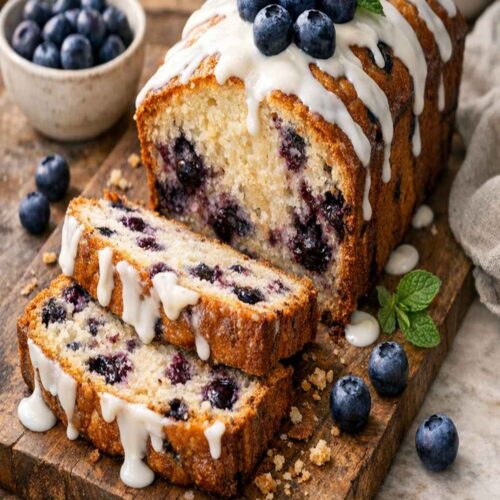
Blueberry Loaf With Yogurt Recipe

There's something about a slice of blueberry loaf with afternoon tea or coffee that just feels like a warm hug. This version uses full-fat plain yogurt to create an incredibly moist crumb that stays tender for days—it's the secret ingredient that elevates this from ordinary to something people actually remember. The bright lemon zest throughout pairs beautifully with tart berries, and the simple glaze on top adds just enough sweetness without being heavy. If you're looking for other comforting baked goods to round out your kitchen rotation, you might also love our Trader Joe's Cinnamon Swirl Bread Recipe.
Ingredients
For the Cake
- ½ cup neutral oil such as canola or grapeseed bring to room temperature
- 2 teaspoon fresh lemon zest from 1 large or 2 small lemons
- 3 large eggs 55-60g each, room temperature for best emulsification
- ½ teaspoon pure vanilla extract not imitation
- 2 teaspoon baking powder aluminum-free if you have sensitivity
- 1½ cup fresh or frozen blueberries no need to thaw frozen berries
- 2 teaspoon all-purpose flour for coating berries before folding
- 1 cup full-fat plain yogurt Greek or regular, not low-fat or non-fat
- 1 cup granulated sugar preferably superfine or caster sugar for tender crumb
- ¼ teaspoon fine sea salt
- 1¾ cup all-purpose flour spooned and leveled, never packed
For the Lemon Glaze
- 2 tablespoon fresh lemon juice about 1 medium lemon
- 1½ cup powdered sugar sifted to remove lumps
- 1-2 tablespoon whole milk add gradually until you reach pourable consistency
Instructions
Step 1: Prepare Your Pan and Preheat the Oven
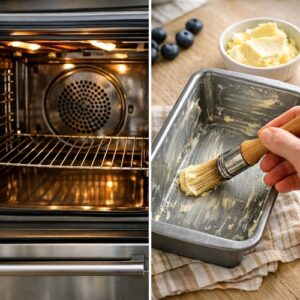
- Position your oven rack to the center and preheat to 200°C (390°F), or 180°C (350°F) if using a convection fan. While that heats, butter the inside of a standard loaf pan generously—pay special attention to the corners—and line it with parchment paper, allowing the paper to overhang slightly on the long sides (this makes removal so much easier). Set aside.
Step 2: Coat Your Blueberries
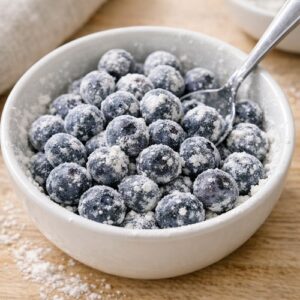
- Pour your blueberries into a small bowl and toss them with the 2 teaspoons of flour. This coating prevents them from sinking to the bottom of the loaf. If using frozen berries, they actually coat better than fresh berries because the flour adheres more easily to their surface. Don't thaw them—the frozen berries will thaw slightly during mixing and distribute more evenly throughout the batter.
Step 3: Whisk Together Dry Ingredients
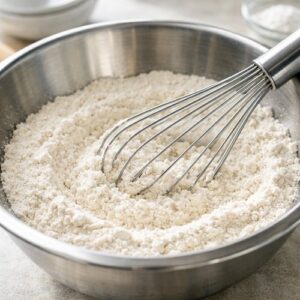
- In a large mixing bowl, whisk together the flour, baking powder, and salt. I use a whisk here rather than sifting because I want to incorporate air—it helps create that tender crumb we're after. This should take about 30 seconds of whisking. Set this bowl aside and don't clean your whisk; you'll use it again.
Step 4: Combine Wet Ingredients
- In a separate medium bowl, whisk together the room-temperature eggs, full-fat yogurt, oil, sugar, lemon zest, and vanilla extract. Whisk vigorously for about 1-2 minutes until the mixture is smooth, pale, and slightly thickened. This emulsification is important—it helps incorporate air and ensures even distribution of fat throughout the batter. You should see the mixture become slightly lighter in color.

Step 5: Combine Wet and Dry
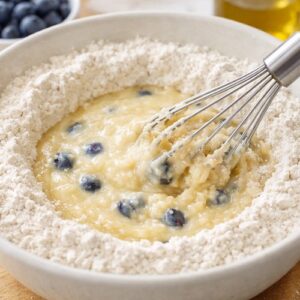
- Create a well in the center of your dry ingredients and pour the wet mixture into it. Using your whisk, fold and gently stir until you see just a few streaks of flour remaining—this should take about 10-15 stirs. Stop here. Overmixing develops gluten, which makes the loaf tough and dense. A few small lumps are completely fine and actually desirable.
Step 6: Fold in Blueberries
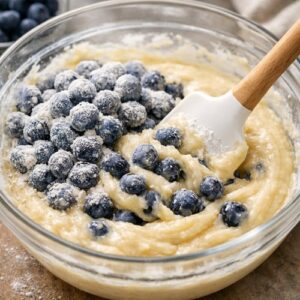
- Pour the floured blueberries into the batter, including any residual flour clinging to them. Use a rubber spatula to fold them in gently, making about 4-5 folding motions. You want the berries distributed throughout without crushing them or overworking the batter. Some berries will settle toward the bottom—that's perfectly normal and creates nice texture variation in each slice.
Step 7: Pour and Bake
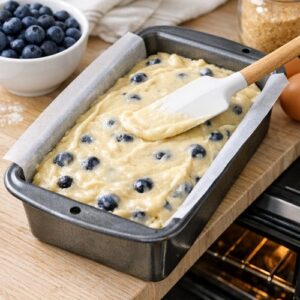
- Transfer the batter to your prepared loaf pan, using a spatula to even out the top gently. Place in the preheated oven and bake for 50 minutes. At this point, the top should be pale golden and the loaf should smell incredible. If the top is browning quickly or evenly, cover it loosely with aluminum foil and continue baking. Bake for another 15-25 minutes. To test for doneness, insert a wooden skewer into the center; it should come out clean or with just a few moist crumbs clinging to it. If it comes out with wet batter, bake another 10 minutes and test again. Total baking time is usually 60-70 minutes, depending on your oven.
Step 8: Cool and Release
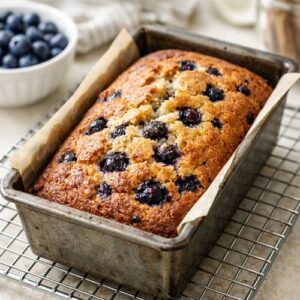
- Remove the loaf from the oven and let it rest in the pan for 5 minutes—this gives the crumb time to set slightly so it won't fall apart when you turn it out. Using the parchment paper overhang, gently lift the loaf onto a wire cooling rack. Let it cool completely—this takes about 1-2 hours. I know it's tempting to slice warm loaf, but the structure will be stronger and cleaner slices easier once fully cooled.
Step 9: Make the Glaze
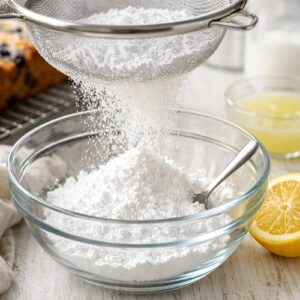
- While the loaf cools, prepare the lemon glaze. Sift the powdered sugar into a medium bowl (this removes lumps and prevents a gritty glaze). Add the fresh lemon juice and whisk until smooth. Add milk one tablespoon at a time, whisking well after each addition, until the glaze reaches a consistency just thick enough to drip slowly off a spoon—you want it pourable but not runny. It should coat the back of a spoon but still flow slowly.
Step 10: Glaze and Set
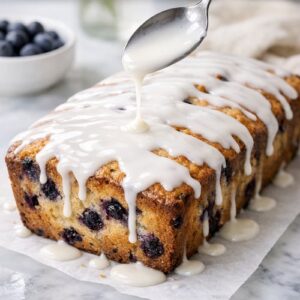
- Once the loaf has cooled completely, drizzle the glaze over the top in a thin, even layer. You can let it pool naturally or use the back of a spoon to guide it. Let the glaze set for about 20 minutes at room temperature before slicing. This setting time ensures the glaze firms up slightly and creates a nice texture contrast with the soft crumb beneath.
Notes
- Room temperature ingredients are essential - Cold eggs and yogurt won't emulsify properly with the oil. About 30 minutes on the counter before you start does the trick. Room temperature ingredients mix more smoothly and create better texture.
- Fresh lemon zest over extract - The difference is dramatic. Zest contains the essential oils that make lemon flavor bright and aromatic. Extract is convenient but flat by comparison. Invest in a microplane zester—it's one of my most-used kitchen tools.
- Don't skip coating the berries - This single step prevents the berries from all sinking to the bottom. The flour coating acts like a suspension system, keeping berries distributed throughout the loaf.
- Use a loaf pan thermometer if you have one - The center of the loaf should reach 205-210°F. This removes guesswork from doneness testing and ensures your loaf bakes evenly.
- Parchment paper is non-negotiable - It ensures your loaf releases cleanly without sticking. Butter alone isn't enough.
- Make the glaze with fresh lemon juice - Bottled lemon juice tastes flat and slightly bitter. Fresh juice takes 10 seconds to squeeze and makes a noticeable difference in flavor.
Nutrition
Calories: 377kcalCarbohydrates: 60gProtein: 5gFat: 14gSaturated Fat: 2gCholesterol: 52mgSodium: 33mgFiber: 1gSugar: 41g
Tried this recipe?Let us know how it was!