 Elaine Gordon
Crispy golden carrot fries are my go-to side dish when I want something that feels indulgent but actually nourishes my body. I serve them alongside everything from grilled chicken to grain bowls, and they’ve become a staple in my weeknight rotation. They’re equally at home next to Asian Tacos or as a standalone snack with your favorite dip.
How Roasted Carrots Became My Favorite Side Dish
I grew up watching my mother transform simple vegetables into something my siblings and I actually wanted to eat. She’d roast root vegetables until their edges caramelized, and I remember the kitchen filling with this warm, almost sweet aroma that made us linger at the dinner table longer than usual.
Years later, when I became a registered dietitian, I understood what was happening on a nutritional level—the high heat was unlocking beta-carotene and creating complex flavors through the Maillard reaction. But emotionally, it still felt like magic. These carrot fries bring that same feeling to my kitchen now, and they’re one of the easiest ways I know to get family members excited about eating vegetables.
What is Carrot Fries Recipe?
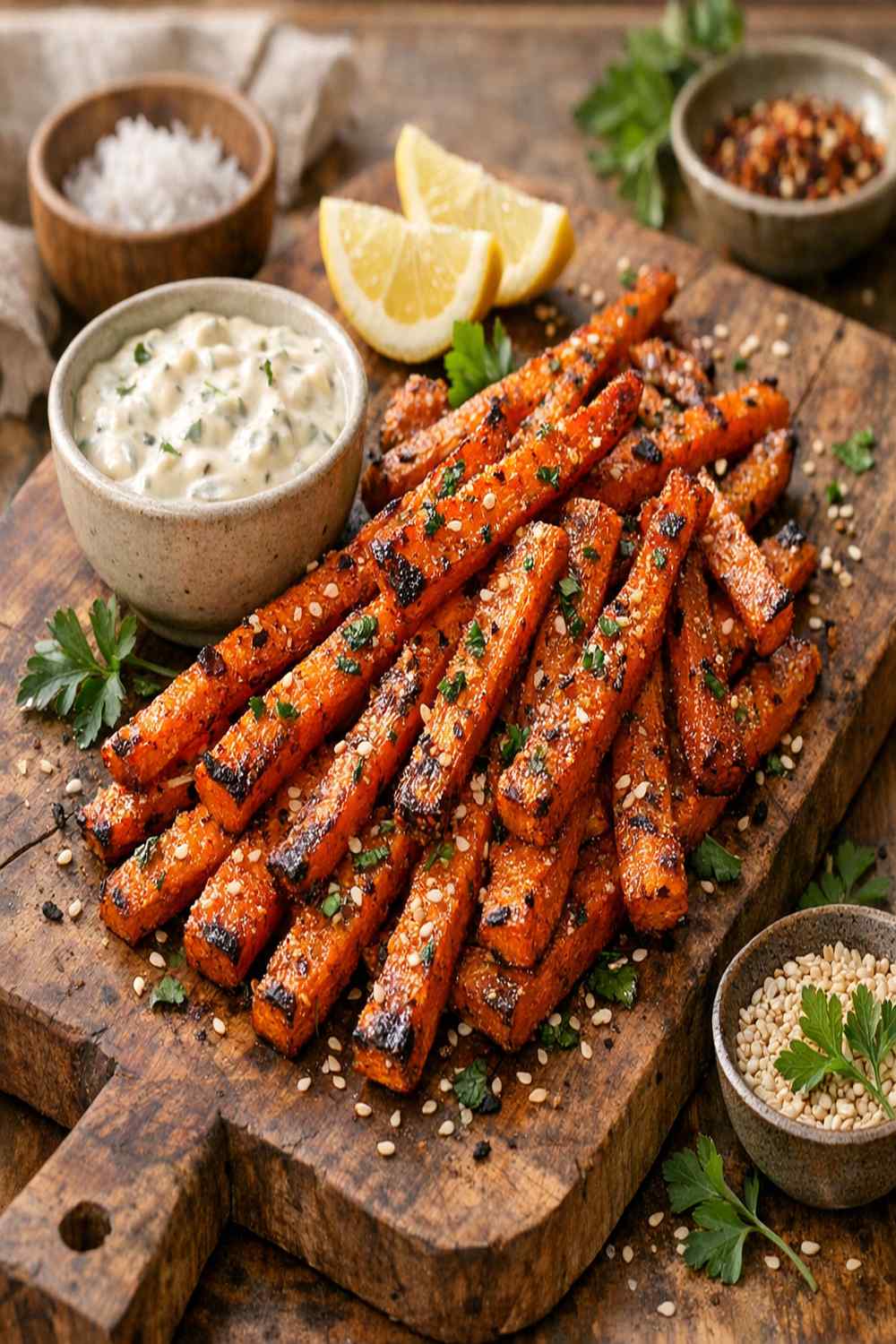
Carrot fries are thin-cut carrots that get roasted in the oven until they’re caramelized on the outside and tender within. Unlike the pale, limp versions you might find at restaurants, homemade carrot fries have real depth—a combination of natural sweetness, smoky spice, and satisfying crunch.
The beauty of this recipe lies in its simplicity. You’re not deep-frying anything or using excessive amounts of oil. Instead, a light coating of oil combined with cornstarch creates that crispy exterior while the oven’s dry heat brings out the carrots’ natural sugars. The smoked paprika and cumin add complexity without overpowering the vegetable itself.
This isn’t a trendy health food—it’s actually rooted in traditional cooking methods. Roasting vegetables is one of the oldest techniques in the culinary world, and for good reason. When you apply heat to a carrot, you’re creating hundreds of new flavor compounds that simply don’t exist in the raw vegetable.
Why You’ll Love This Carrot Fries Recipe
- They’re genuinely crunchy and satisfying – The cornstarch is key here. It creates a delicate crispy coating without adding deep-fry guilt. I use just enough to make a difference in texture without making them taste starchy.
- The spice profile is sophisticated but approachable – Smoked paprika brings warmth and depth, while cumin adds an earthy note that makes people say “what is that amazing flavor?” It’s not spicy hot—it’s complex and cozy.
- They come together in under 30 minutes – Minimal prep work, minimal cleanup. Once they’re in the oven, you can focus on the rest of your meal.
- They’re naturally sweet without added anything – Carrots contain about 6 grams of natural sugar per medium carrot. When you roast them, those sugars concentrate and caramelize. No honey, no brown sugar needed.
- They work for meal prep and entertaining alike – Make a batch on Sunday for weeknight side dishes, or serve them warm at a dinner party with an impressive dipping sauce.
- They’re packed with nutrients that actually matter – One cup of roasted carrots provides over 300% of your daily vitamin A needs, plus fiber, potassium, and antioxidants. I’ll explain more in the nutrition section below.
The Ingredients
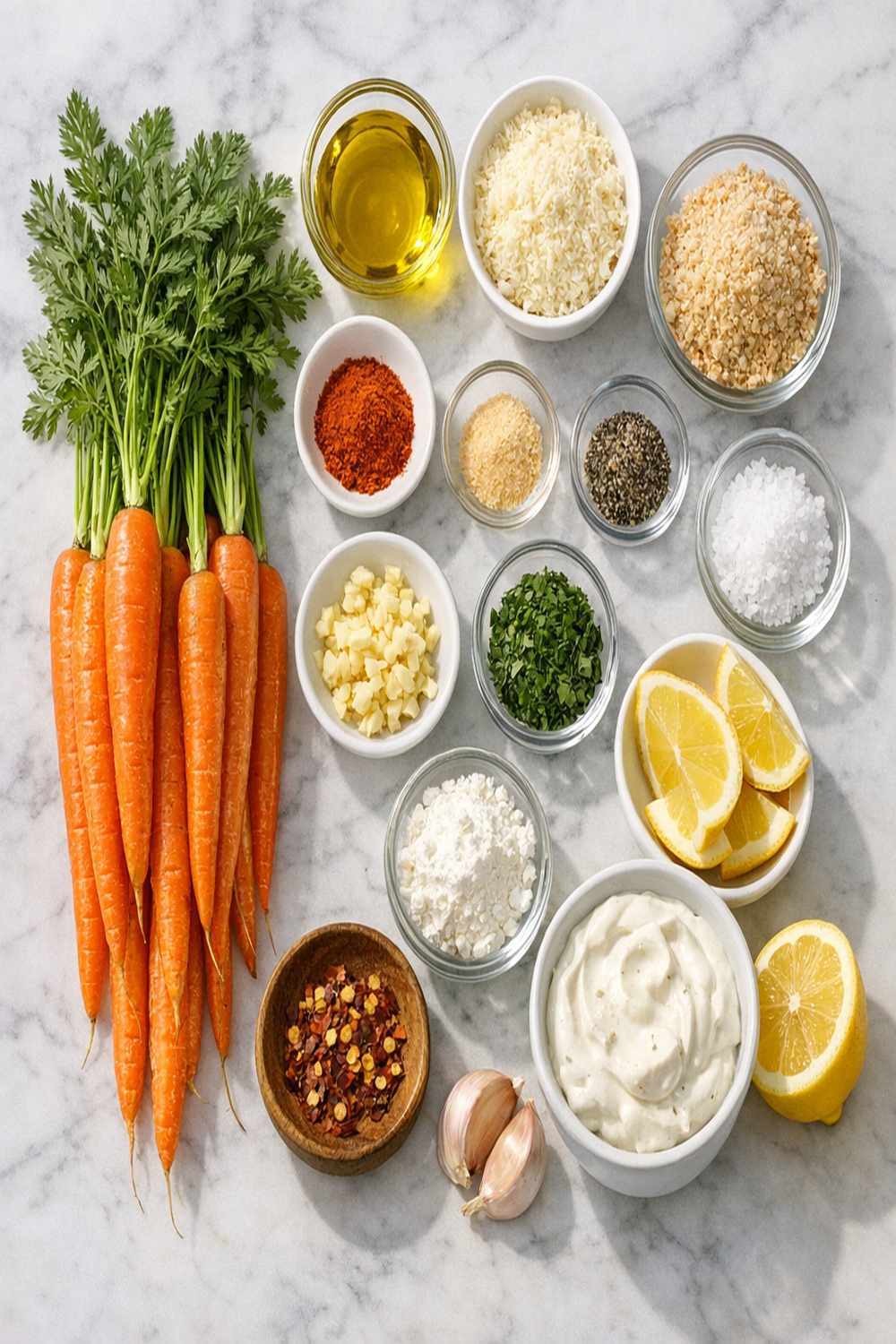
This recipe makes about 4 servings as a side dish. I’ve chosen each ingredient deliberately—nothing fancy, nothing you can’t find at any grocery store. The star is the carrot itself, but the supporting players matter enormously.
- 2 teaspoons cornstarch (this is the secret to crispiness)
- ½ teaspoon fine sea salt (enhances natural carrot sweetness)
- 1 pound medium carrots (about 6-7 carrots, cut into matchstick-size pieces)
- 1 teaspoon smoked paprika (adds depth and warmth)
- ¼ teaspoon freshly ground black pepper (don’t skip this)
- 1 tablespoon neutral oil (avocado or light olive oil work best here)
- 2 tablespoons fresh cilantro or flat-leaf parsley (chopped fine)
- ½ teaspoon ground cumin (brings earthiness)
- Optional: fleur de sel or sea salt finishing flakes for garnish
How to Make Carrot Fries?
The process is straightforward, but I’ll walk you through each step with specific details that make the difference between good fries and truly excellent ones. Pay attention to the texture cues I mention—they matter more than exact timing, since oven temperatures vary.
Step 1: Prepare Your Carrots
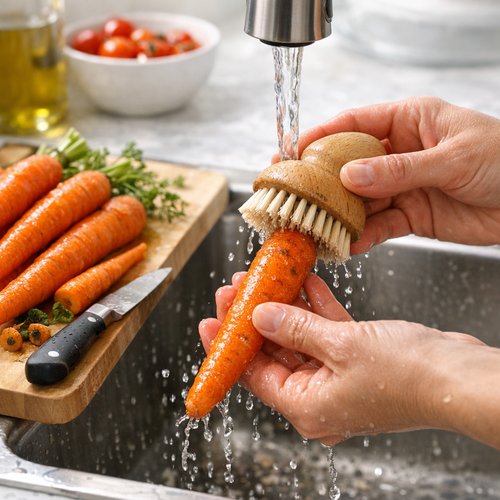
Start by scrubbing your carrots under cool running water. I don’t peel mine—the skin contains nutrients and adds texture. Cut off the stem and root end, then slice each carrot lengthwise into thin planks, roughly ¼-inch thick. From there, slice those planks into sticks that look like thin french fries, about 3-4 inches long.
The uniformity matters here. Thinner pieces will crisp up faster, while thicker ones stay tender inside. Try to keep them consistent so they finish cooking at the same time. You should have roughly 4 cups of carrot sticks when you’re done.
Step 2: Coat With Oil and Spices
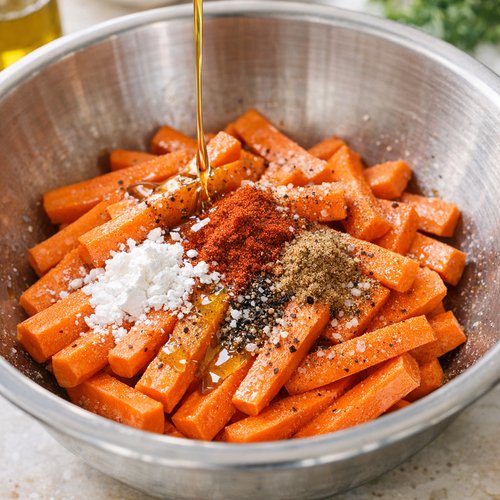
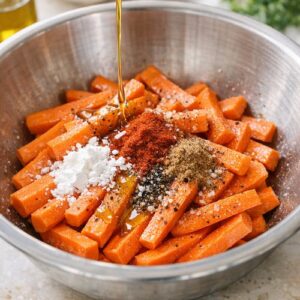
Transfer your cut carrots to a large mixing bowl. Drizzle with the oil and sprinkle the cornstarch, smoked paprika, cumin, salt, and pepper over top. Using your hands (I promise, it’s faster and easier), toss everything together for about a minute until every piece is lightly and evenly coated.
This is where I see people make mistakes—they’re timid with the tossing. Be thorough. You want every carrot stick to touch that spice mixture. The cornstarch should look like a light powder clinging to the carrots, not a thick paste.
Step 3: Arrange on Your Baking Sheet
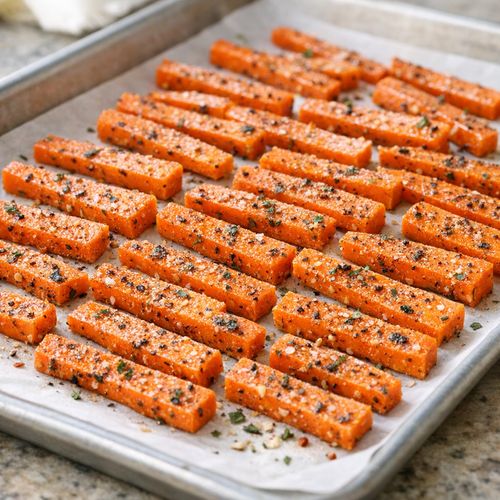
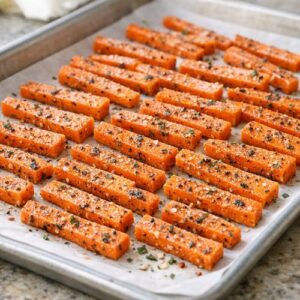
Preheat your oven to 425°F. Line a standard rimmed baking sheet with parchment paper or a silicone mat. Spread your seasoned carrots in a single layer, leaving small gaps between pieces. Don’t crowd them—they need air circulation to crisp properly.
If your carrots are piled on top of each other, they’ll steam instead of roast, and you’ll lose that prized crispiness. It’s tempting to fit everything on one sheet, but use two if you need to.
Step 4: Roast and Flip Halfway Through
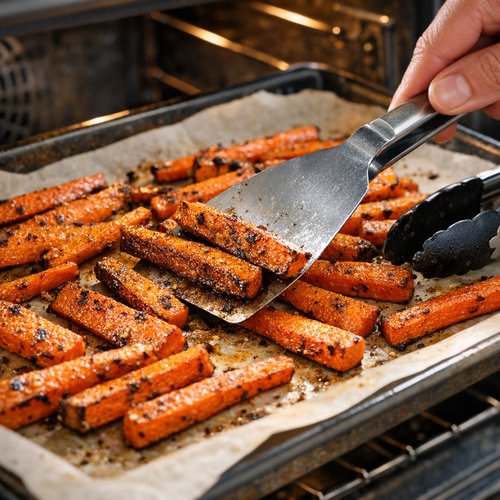
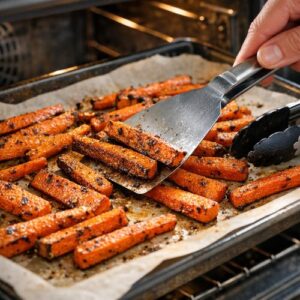
Place your baking sheet in the preheated oven. After about 10 minutes, use a spatula or tongs to flip the carrots. You’ll notice the undersides touching the sheet are starting to turn golden. That’s the caramelization happening. Flip them so the other side gets the same treatment.
Return them to the oven for another 8-10 minutes. You’re looking for light golden-brown spots and edges that look slightly shriveled—that’s when the sugars have really concentrated and the texture is at its best. Some pieces will brown more than others, and that’s perfect.
Step 5: Finish With Fresh Herbs and Taste
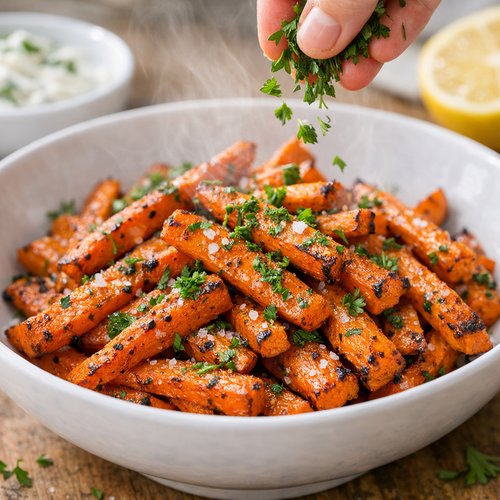
Remove the sheet from the oven and immediately transfer the hot carrot fries to a serving bowl or plate. While they’re still steaming, scatter the chopped cilantro or parsley over top and toss gently. Taste one piece and decide if you want an extra pinch of salt—I usually do.
If you’re serving these with a finishing salt like fleur de sel, sprinkle it on now. The warmth helps it adhere, and the larger crystals add a pleasant textural contrast to the tender-crispy fries.
Expert’s Nutritional Tip
Here’s something I explain to clients constantly: the compounds in carrots that give them their orange color—the carotenoids, particularly beta-carotene—are fat-soluble. That means your body absorbs them better when they’re eaten with a bit of fat. This recipe includes just enough oil to enhance absorption, which is why even the small amount matters nutritionally.
Additionally, cooking carrots actually increases the bioavailability of their carotenoids compared to raw carrots. The heat breaks down cell walls, making nutrients more accessible to your body. So these roasted fries are literally more nutritious than raw carrot sticks, not less. I love when healthy eating aligns with delicious eating.
Tips and Tricks
- Cut your carrots slightly thinner than you think – They shrink as they cook and release moisture. A piece that seems too thin raw will be perfectly substantial when roasted. Aim for about 3-4mm thickness.
- Don’t skip the cornstarch – People often ask if they can leave it out. Technically yes, but you lose significant crispiness. Cornstarch has a higher gelatinization temperature than flour, which means it creates a superior crust. It’s not a filler—it’s functional.
- Use smoked paprika, not regular paprika – The difference is remarkable. Smoked paprika brings a depth that feels almost smoky-grilled, while regular paprika is pretty one-dimensional. It’s a small detail that elevates the whole dish.
- Don’t wash your bowl between coating and baking – Any residual spice mixture that sticks to the bowl? That’s flavor concentrate. Just transfer the carrots straight to your sheet.
- Check them around the 18-minute mark – Oven temperatures vary, and carrot thickness varies. Start checking at 18 minutes. They should bend slightly but not be limp. The edges should be burnished, not dark brown.
- Serve immediately for best texture – They’re best enjoyed right out of the oven while the contrast between crispy outside and tender inside is most pronounced. They’ll still taste good at room temperature, but the textural magic fades.
- Double the batch for meal prep – Make a full sheet or two on a weekend afternoon. Store them properly (see storage section) and you’ve got a ready-to-go side dish all week.
Make-Ahead Guide
From my experience as both a dietitian and home cook, I know weeknight dinners are easier when components are prepped ahead. Here’s my system for carrot fries:
Prep ahead (up to 2 days before): Cut and season your carrots the morning you plan to roast them, or even the night before. Place them in an airtight container in the refrigerator. The spices won’t penetrate as deeply as if they sit longer, but they’ll still taste good, and you’re saving significant prep time on cooking day.
Roast ahead (same day, best within 4 hours): You can roast these up to 4 hours before serving. Store them in an airtight container at room temperature. To refresh them before serving, spread them on a baking sheet and warm in a 350°F oven for about 5 minutes. This restores some of the crispiness without drying them out.
Freeze for longer storage: If you’ve made a big batch, let the fries cool completely, then spread them on a parchment-lined tray and freeze until solid (about 2 hours). Transfer to a freezer bag and store for up to 3 months. Reheat directly on a baking sheet at 375°F for about 8 minutes.
Pro move for busy weeks: Cut and season the carrots on Sunday evening. Monday through Thursday, all you do is bake for 20 minutes. It makes weeknight side dishes feel effortless.
Common Mistakes to Avoid
- Cutting the carrots too thick – I see this constantly. People worry about making them too thin and ending up with mushy fries. Reality: thin carrots get crispy and delicious. Thick carrots stay tough and chewy. When in doubt, go thinner. You can always cut thinner next time.
- Crowding the baking sheet – This is the #1 reason homemade carrot fries don’t crisp up properly. If carrots are piled on top of each other, the steam has nowhere to go. They braise instead of roast. Use two sheet pans if necessary.
- Using a dark baking sheet without watching closely – Dark sheets absorb more heat, which can burn the bottoms before the insides cook through. If you only have dark sheets, line them with parchment and check at 15 minutes instead of 20.
- Forgetting the flipping step – I know it’s tempting to set it and forget it. But that one flip at the 10-minute mark makes a huge difference in even browning and overall texture. Set a phone reminder if you’re worried about forgetting.
Seasonal Variations
This basic formula is versatile enough to adapt throughout the year based on what’s available and what your meals need.
Spring: Skip the cumin and smoked paprika. Instead, use 1 teaspoon dried dill and ½ teaspoon garlic powder. Finish with fresh lemon zest and chives. Lighter and brighter, perfect with fish.
Summer: Go with smoked paprika and cumin as written, but finish with a sprinkle of tajín (the chili-lime seasoning) and fresh cilantro instead of parsley. Serve with lime wedges for squeezing.
Fall: Replace cumin with ½ teaspoon cinnamon and add a pinch of nutmeg. Keep the smoked paprika. Finish with fresh sage. These pair beautifully with roasted chicken or pork.
Winter: Use smoked paprika, cumin, and add ¼ teaspoon cayenne for a tiny kick. Finish with parsley and a sprinkle of finishing salt. They’re warming and hearty alongside roasted root vegetable grain bowls.
Can I Store Carrot Fries?
Storage depends on when you made them and what you’re storing.
Freshly roasted fries (best eaten immediately): These are crispiest in the first hour after roasting. After that, they gradually soften as they cool and any residual moisture settles in.
Refrigerator storage (3-4 days): Place cooled fries in an airtight container. They’ll keep for 3-4 days without safety issues. To reheat, spread on a sheet and warm at 350°F for 5 minutes to restore crispiness.
Freezer storage (up to 3 months): Cool the fries completely, arrange on a parchment-lined tray, and freeze until solid. Transfer to a freezer bag, pressing out excess air. They’ll keep up to 3 months. Reheat directly from frozen at 375°F for 8-10 minutes.
Room temperature (same day only): If you’re serving them at a dinner party, they’re fine at room temperature for up to 4 hours. After that, bacteria growth becomes a concern, so refrigerate or discard.
Nutrition Information
Per serving (approximately 1 cup of cooked carrot fries, based on 4 servings total):
- Calories: 85
- Fat: 4g (mostly from the cooking oil)
- Carbohydrates: 11g (primarily from natural carrot sugars)
- Fiber: 2.5g (from skin and flesh)
- Protein: 1g
- Vitamin A (beta-carotene): 318% of Daily Value
- Vitamin K: 24% of Daily Value
- Potassium: 11% of Daily Value
These numbers are calculated from USDA FoodData Central. The vitamin A content is particularly notable—carrots are genuinely one of the most nutrient-dense vegetables available. That 318% of your daily vitamin A is real, and it matters for your vision, immune function, and skin health.
The fiber content, while modest, contributes to satiety and supports digestive health. And because you’re only using 1 tablespoon of oil for the entire batch, the fat content is minimal while still being enough to enhance nutrient absorption and create that satisfying texture.
What Can I Serve With Carrot Fries?
These are genuinely flexible. I serve them with everything from weeknight proteins to fancy dinner party mains. Here are my go-to combinations:
- With grilled chicken or fish – A simple herb-roasted chicken breast or pan-seared salmon needs something bright and textural on the side. These deliver.
- With grain bowls – Alongside quinoa, roasted vegetables, and a tahini dressing, they add textural interest and natural sweetness that balances savory elements.
- With roasted broccoli – Create a rainbow veggie plate by pairing these orange fries with green roasted broccoli. Add a chickpea or bean component and you’ve got a complete vegetarian meal.
- As a side to my weeknight pasta – The sweetness and texture of the fries provides nice contrast to a savory pasta.
- With Mediterranean grain salads – Toss them with couscous, chickpeas, cucumber, and a lemon vinaigrette for a complete side dish.
- As a snack with dips – Hummus, tahini sauce, yogurt-based ranch, or even a simple avocado crema. They’re perfect for dipping.
Dip suggestions: I rotate between a simple herbed yogurt (Greek yogurt mixed with dill and lemon), a spicy sriracha-mayo, a cilantro-lime crema, and straight-up guacamole. Any of these elevates the fries from side dish to something more substantial.
Substitutes
- Parsnips instead of (or in addition to) carrots – Parsnips are starchier and sweeter than carrots. They crisp up beautifully and add complexity. Use the same weight and seasonings. Mix half carrots and half parsnips for a sophisticated variation.
- Sweet potatoes for regular carrots – Sweet potatoes have more moisture, so they take slightly longer (22-25 minutes) to achieve crispiness. The flavor profile is different but equally delicious. Cut them into the same thin sticks.
- Other ground spices instead of cumin – If you don’t have cumin, try ½ teaspoon coriander, or ½ teaspoon garlic powder, or even ½ teaspoon curry powder. Keep the smoked paprika as your anchor spice.
- Arrowroot powder instead of cornstarch – Both create crispiness similarly. Use the same amount. Some people prefer arrowroot for digestive reasons.
- Grapeseed oil or avocado oil instead of neutral oil – These have higher smoke points and won’t break down at 425°F. Use the same amount.

Carrot Fries Recipe

Ingredients
- 2 teaspoon cornstarch this is the secret to crispiness
- ½ teaspoon fine sea salt enhances natural carrot sweetness
- 1 pound medium carrots about 6-7 carrots, cut into matchstick-size pieces
- 1 teaspoon smoked paprika adds depth and warmth
- ¼ teaspoon freshly ground black pepper don't skip this
- 1 tablespoon neutral oil avocado or light olive oil work best here
- 2 tablespoon fresh cilantro or flat-leaf parsley chopped fine
- ½ teaspoon ground cumin brings earthiness
- Optional: fleur de sel or sea salt finishing flakes for garnish
Instructions
Step 1: Prepare Your Carrots
- Start by scrubbing your carrots under cool running water. I don't peel mine—the skin contains nutrients and adds texture. Cut off the stem and root end, then slice each carrot lengthwise into thin planks, roughly ¼-inch thick. From there, slice those planks into sticks that look like thin french fries, about 3-4 inches long. The uniformity matters here. Thinner pieces will crisp up faster, while thicker ones stay tender inside. Try to keep them consistent so they finish cooking at the same time. You should have roughly 4 cups of carrot sticks when you're done.

Step 2: Coat With Oil and Spices
- Transfer your cut carrots to a large mixing bowl. Drizzle with the oil and sprinkle the cornstarch, smoked paprika, cumin, salt, and pepper over top. Using your hands (I promise, it's faster and easier), toss everything together for about a minute until every piece is lightly and evenly coated. This is where I see people make mistakes—they're timid with the tossing. Be thorough. You want every carrot stick to touch that spice mixture. The cornstarch should look like a light powder clinging to the carrots, not a thick paste.
Step 3: Arrange on Your Baking Sheet
- Preheat your oven to 425°F. Line a standard rimmed baking sheet with parchment paper or a silicone mat. Spread your seasoned carrots in a single layer, leaving small gaps between pieces. Don't crowd them—they need air circulation to crisp properly. If your carrots are piled on top of each other, they'll steam instead of roast, and you'll lose that prized crispiness. It's tempting to fit everything on one sheet, but use two if you need to.
Step 4: Roast and Flip Halfway Through
- Place your baking sheet in the preheated oven. After about 10 minutes, use a spatula or tongs to flip the carrots. You'll notice the undersides touching the sheet are starting to turn golden. That's the caramelization happening. Flip them so the other side gets the same treatment. Return them to the oven for another 8-10 minutes. You're looking for light golden-brown spots and edges that look slightly shriveled—that's when the sugars have really concentrated and the texture is at its best. Some pieces will brown more than others, and that's perfect.
Step 5: Finish With Fresh Herbs and Taste
- Remove the sheet from the oven and immediately transfer the hot carrot fries to a serving bowl or plate. While they're still steaming, scatter the chopped cilantro or parsley over top and toss gently. Taste one piece and decide if you want an extra pinch of salt—I usually do. If you're serving these with a finishing salt like fleur de sel, sprinkle it on now. The warmth helps it adhere, and the larger crystals add a pleasant textural contrast to the tender-crispy fries.

Notes
Nutrition
FAQs
Why aren’t my carrot fries getting crispy?
This usually comes down to one of three issues: they’re too thick, your sheet is crowded, or you skipped the flip. Thin-cut carrots in a single layer, flipped halfway through, will crisp up. If you’re still having trouble, make sure your oven actually reaches 425°F (many ovens run cooler than they claim). Use an oven thermometer to verify.
Can I make these without cornstarch?
Technically yes, but I don’t recommend it. You’ll get roasted carrots, which are delicious, but you’ll lose the crispy texture that makes these special. If you have a cornstarch allergy, arrowroot powder works similarly. If you need it completely starch-free, just know they won’t be as crispy.
What’s the best way to reheat leftover carrot fries?
Spread them on a baking sheet and warm at 350°F for 5 minutes. This restores crispiness without drying them out. Microwaving will make them soft and chewy—avoid that if you can. If you must microwave, do it in very short bursts of 30 seconds at a time.
Can I cut the carrots ahead of time?
Yes, but do it the same day you plan to roast them. Cut carrots release moisture as they sit, which can make them harder to crisp. If you must cut them earlier, store them in cold water in the refrigerator, then pat completely dry before seasoning and roasting.
Are carrot fries actually healthy?
Yes. You’re eating a whole vegetable with real nutritional density—vitamin A, fiber, potassium. You’re using minimal oil (just 1 tablespoon for 1 pound of carrots), no deep-frying, no added sugars. The natural sweetness comes from the carrot itself. As a registered dietitian, I genuinely serve these to my family and feel good about it nutritionally.
More Recipes You’ll Love
- Best DIY Foil Packet Meals – Perfect for using these carrot fries as a component in complete one-packet dinners
- Trader Joe’s Soyaki Recipe – An excellent dipping sauce option for your finished carrot fries with sweet and savory depth
- 12oz Roasted Frozen Broccoli Recipe – Another roasted vegetable side that uses the same basic technique and pairs beautifully on the same plate
- Asian Tacos Recipe – These spiced carrot fries make an excellent filling or topping for fusion-style tacos
There’s something deeply satisfying about serving food you’ve made from scratch—something that tastes better and nourishes better than anything processed. These carrot fries represent that philosophy perfectly. They’re humble but special, simple but sophisticated enough for company, and they’ve genuinely converted more than a few vegetable-skeptics at my dinner table.
The next time you’re planning a meal and you’re caught between convenience and care, remember that homemade carrot fries take 20 minutes of active cooking time. They’re not a project. They’re just real food, seasoned thoughtfully, roasted until golden, and served with intention. That’s what I believe healthy eating should feel like—not restrictive or complicated, but genuinely delicious.
Enjoy your cooking!!